Weather
It’s been wet and muddy with
the rivers and luggas overflowing. Game drives are only possible with 4x4 vehicles.
From Mara Intrepids Camp it’s
possible to access all sides of the reserve. Guests walk across the camp’s foot
bridge to the vehicles parked on the other side of Talek River. It’s quite
spectacular to cross this suspended bridge when the river is in full spate and
be able to see the occasional crocodile sunning itself on one of the rocks.
 |
| Mara Intrepid's foot bridge. File. |
There are heavy downpours on
most evenings but by morning the sky is clear followed by a hot day.
Temperature
170c morning
280c at midday
220c after sunset.
The Plain game
The grass is overgrown in
some areas of the reserve, pushing the grazers to plains with shorter grass.
For some grazers, it’s a safety measure, for if they stay where the grass is
too tall they can’t see the predators which use the grass as cover to stalk their
prey.
Other grazers are just
specialized short grass feeders.
Predators
Lions
Lion’s sightings are good. They
are easily seen in their territories searching for prey - warthogs and Topis
are their main target.
Notch’s boys can’t starve with hippos around. Since the start of this year, they have already killed two hippos in Talek River, three kilometers south of Mara Intrepids Camp.
The lion cubs are struggling to survive for there is not enough food for them. If this continues, we are likely to lose some cubs to starvation.
 |
| Mohican and Romeo 2 |
Mohican and Romeo 2 have
established themselves with three lionesses and six cubs aged four months at Double Cross, between Intiakitiak and Olare Orok. Mohican and
Romeo 2 are sons of Chesa and Sala from the Olkiombo pride. Their father was killed when Notch and his sons took over the Olkiombo pride. They have taken over a section of the Ridge pride which disintegrated to form their own pride.
Cheetah
Malaika is expecting. She’s
roaming around Shamarta Hill overlooking Mara River, which is five kilometers
west of Mara Intrepids Camp.
Amani’s three cubs’ – that’s
two males and one female are still together. They separated from the mother in September
2013 and are seen around Mara Explorer and Double-Crossing River.
Leopard
The new leopard male, who is
shy and skittish is seen around Double-Crossing and Mara Explorer Camp. He may
be tracking Olive’s female cubs,
Saba and Bahati.
Saba has established herself
at Mara Explorer while Bahati is controlling the area around Talek and Olare Orok
rivers.
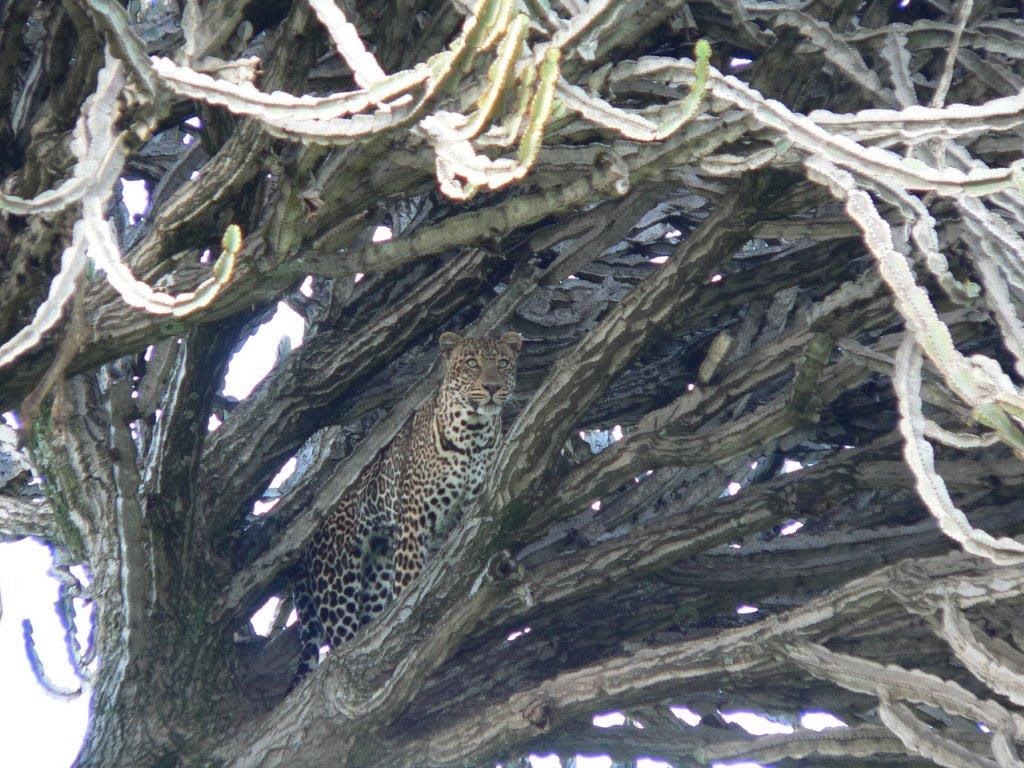 |
| Shujaa scans the plains from a vantage point. |
 |
| Bahati, Olive's daughter, just behind the Mara Intrepids foot bridge. |
Shujaa and Siri are at Shamarta
and Paradise plains.
Other special cat sightings
Two caracal couples based between Smelly and Double crossing are expecting kittens. They are hard to spot in the Mara ecosystem but keep to within this territory. We shall try to keep a look out on these families and report on the new litters.
Caracals resemble the serval cats but don't have spots.
The caracal is also known as a desert lynx and is distributed in Africa, central and southwest Asia, into parts of India. The caracal has been classified variously with Lynx and Felis in the past, but molecular evidence supports a monophyletic genus that is closely allied with the African golden cat and serval. Additional info from Wikipedia.
 |
| A serval cat. File © Heritage Hotels |
Heritage Hotels (Kenya) manages two luxury camps in the Masai Mara - Mara Explorer and Mara Intrepids - in the confluence of the four game viewing areas of the Masai Mara. The camps are on the banks of the Talek River, with most tents spread along the banks. Report and pictures by John Parmasau. ©Heritage Hotels Ltd, Kenya. http://www.heritage-eastafrica.com/