Showing posts with label safari. Show all posts

06 August, 2012

Migration Heads To Olkiombo


It’s cloudy with rain late in the evening. We need the Masai blankets on the game drives to keep warm. The elephants and buffalos are relishing the lush grass.


The great migration begins

There’s a dark cloud of wildebeest south of Mara Intrepids Camp from Pose Plain to Lookout Hill signaling the start of the great migration. The wildebeest, the stars of the migration, are moving up north to reach the endless plains of Olkiombo and Topi. A section of the herd is crossing the Mara Triangle from Lookout Hill.


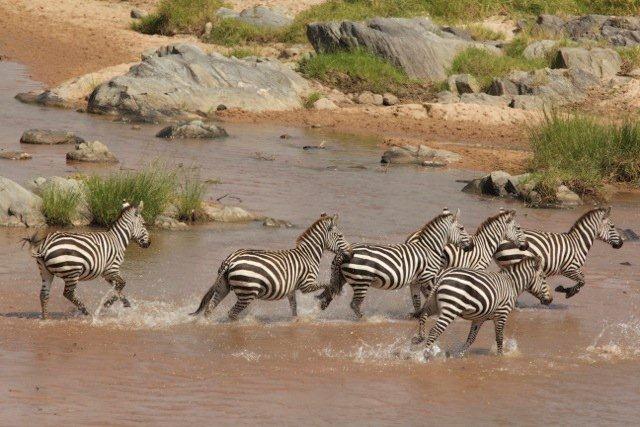
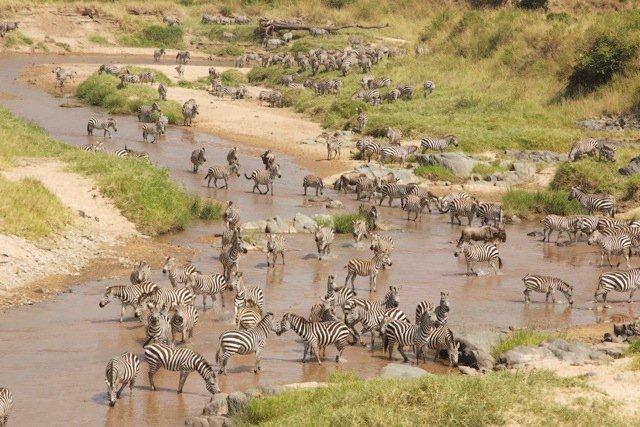
The Talek River is busy with the wildebeest crossing. The females and bulls call all night trying to locate each other. Moving in systematic single files they follow the leaders. The zebras are at Paradise Plain and we’re expecting to see them cross the river any day.

Our crocodiles are having a feast lying in wait for the wildebeest along the rivers.

PREDATORS SIGHTINGS

Lions

There’s no more running around looking for food, while the predators have meals on wheels. The lion prides are positioned at all the crossing points.

The Ridge Pride has gone back to its territory. The Olkiombo has regrouped again along the Talek River. After a long time, the Paradise Pride has shown up with two cubs aged three months.


Leopards

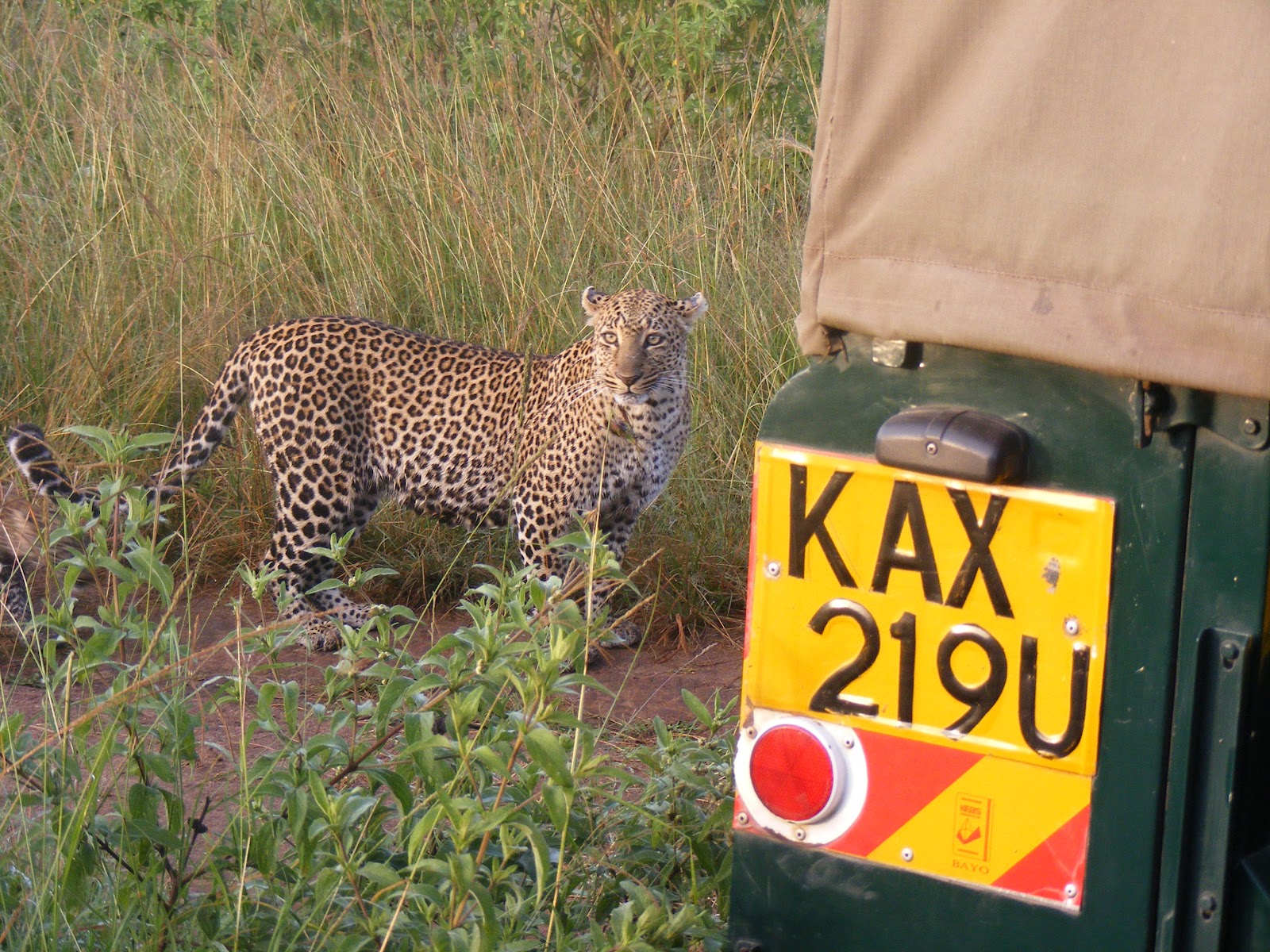
Olive with her cub is west of Olkiombo airstrip. She killed a wildebeest. Bahati has not been seen for three weeks. The Shamarta female is seen almost every day in the morning and evening.


Cheetahs

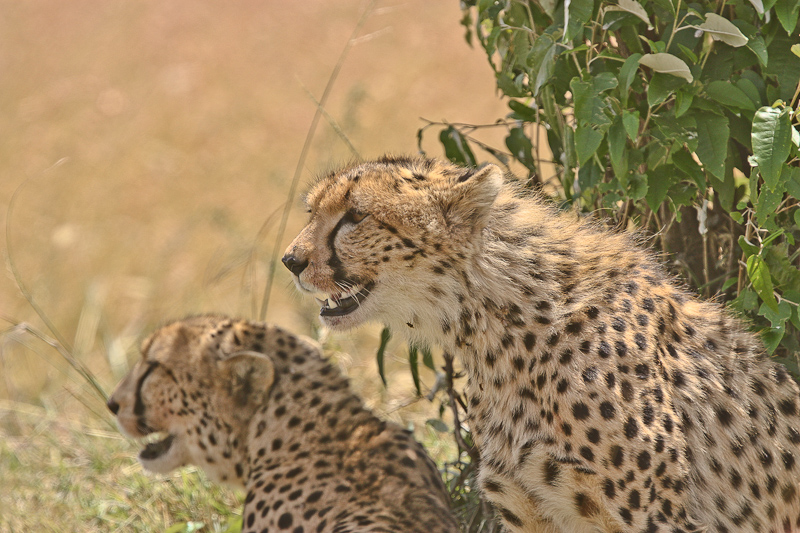
Malaika the female with her cub aged five months is between Intiakitiak and Olare Orok River. She made a successful kill – of a Thomson gazelle but was robbed of it by the two male brother cheetahs. 


Heritage Hotels (Kenya) manages two luxury camps in the Masai Mara - Mara Explorer and Mara Intrepids - in the confluence of the four game viewing areas of the Masai Mara. The camps are on the banks of the Talek River, with most tents spread along the banks.  Report by John Parmasau and pictures by Dickson Chelule (DC),  Mara Explorer & Mara Intrepids Camp ©Heritage Hotels Ltd, Kenya. http://www.heritage-eastafrica.com/

26 July, 2012

The Wildebeest Migration Is On!


It’s cloudy with cold showers late in the evening. The grass is moist and relished by the elephants and buffaloes. The Masai blankets are indispensable on the morning game drives. The impala males are rutting; the elephant females are in estrous and the hippos are mowing the grass along the Olare Orok River. It’s a very active season in the Mara.


WILDEBEEST MIGRATION


The long awaited migration of the wildebeest is on. The plains are rich with zebras, gazelles and many species of birds. There are endless lines of the wildebeest streaming to the Sand River to cross into the Mara game reserve from the bordering Serengeti in Tanzania. Without wasting time around the river, the wildebeest spread in the tall green red oat grass. According to the grazing succession, thousands of zebras lead the way.
They then branch into two groups. One goes up north and the other group moves west towards the Mara River, by the Lookout hill, which is 18 kilometers south of Mara Intrepids Camp.
We hope to see the first crossing at this point in two or three days. There are small groups at Posse and Olkiombo Plains but they look confused as to which way to proceed. The lions and hyenas are having a good time hunting them.

The Loita Plain migration is pressing in from the north towards the Olkiombo Plain.    


PREDATORS SIGHTINGS

Lions

The prides have started to group and position themselves at their favorite strategic points along the rivers where the migration crosses. They are very alert, hiding in the tall grass.
Notch’s boys have not been seen for almost a week. Notch is busy with the four lionesses from the Olkiombo Pride near Maji ya Fisi.
The Olkeju Ronkai pride has moved further south towards Lookout Hill. They could be waiting for the migration or pushed out by the Ridge Pride.
The Ridge Pride has moved to the south of Mara Intrepids Camp to await the wildebeest.

Leopards

After Olive killed the water buck in front of Mara Explorer Camp, she has gone to her hideout area. She will re-emerge when hungry again. She was last spotted by Smelly Crossing, west of the Olkiombo airstrip with her cub.

Another friendly leopard at Shamarta was seen once with an impala kill in a tree and another time looking very relaxed with a Thomson gazelle.

Cheetahs

Malaika (seen above with with her two cubs recently) is around Olkiombo Plain near Mara Intrepids Camp. Unfortunately she has lost one cub to the hyenas and remains with just one.


Heritage Hotels (Kenya)
 manages two luxury camps in the Masai Mara - Mara Explorer and Mara Intrepids - in the confluence of the four game viewing areas of the Masai Mara. The camps are on the banks of the Talek River, with most tents spread along the banks.  Report and pictures by John Parmasau,  Mara Explorer & Mara Intrepids Camp ©Heritage Hotels Ltd, Kenya. http://www.heritage-eastafrica.com/

13 July, 2012

Prepping For The Migration

It’s getting hotter in the Mara hitting a high of 26ºC but the mornings are chilly with temperatures as low as 15ºCThe grass has changed from lush green to gold. It’s pure hay. The elephants and buffaloes are in the valleys and along the water courses where the vegetation is lush with plenty of fresh water available. 


Wildebeest Migration

The annual migration of the wildebeest from the Serengeti into the Mara is late. As we continue to focus our eyes down south hoping for good news and signs of the herds, the zebras are finally at the Sand River gate. They may have been attracted by the recent storm around the Posse Plain, west of the Mara. This could have also triggered the wildebeest to continue the great trek into the Mara.

The domestic herds of wildebeest and zebra from the Loita Plain are heading towards Olare Orok River and Intiakitiak River.

This is good news because it signals the arrival of the southern migration.

Resident Plain Game

Despite the tall grass in the reserve, there’s still good animal sightings around the Mara Intrepids Camp. Not far from the Camp’s suspended bridge over the river, there are large herds of topi and Thomson gazelle, warthog, Silver-backed jackals, elands, giraffes and buffaloes. We’re also seeing a lot of ostrich. The grass here is relatively shorter; therefore it’s become a favourite area for all the grazers. Plus there’s safety in numbers.


Predator Sightings

Lions

Great sightings.
The Rekero Pride (formerly called Ridge Pride) is dominating the Ridge, Olkiombo and Olkeju-Ronkai area. It’s a pride of 11 - four adult lionesses and 7 sub-adults cubs (one female and six males). It’s moving around with Notch and his bully boys. Notch and his boys are harassing other prides, especially around Olkiombo and Olkeju- Ronkai. The smaller prides of fewer than six members cannot withstand the pressure of this group. Many have been injured in fights with Notch’s gang.

When Notch’s gang kills a hippo in another pride’s territory, the Rekero Pride just walks in with no fear and chases away the owners of that territory. It has happened to the Olkiombo female who had a cub. She tried to get a piece of the hippo that had been killed by Notch’s gang in her territory. Instead she was badly injured by Notch’s bully boys neat the sundowner tree.    


Leopards

Olive and her five-month-old cub are by the Olare Orok and Smelly Crossing. Bahati is west of Mara Intrepids Camp. She’s a very interesting young female who is not even two years old but can bring down a full grown male impala – which happens to be her favorite prey. Like her mother, she always feed under cover.


    Olive with her cubs in March.


Heritage Hotels (Kenya) manages two luxury camps in the Masai Mara - Mara Explorer and Mara Intrepids - in the confluence of the four game viewing areas of the Masai Mara. The camps are on the banks of the Talek River, with most tents spread along the banks.  Report and pictures by John Parmasau &  Dixon "DC" Chelule, Mara Explorer & Mara Intrepids Camp ©Heritage Hotels Ltd, Kenya.http://www.heritage-eastafrica.com/

07 March, 2012

Rains In The Masai Mara!

It’s finally the start of the long rains after months of scorching heat.  Daytime temperatures have dropped to 27 0 C while nights are much cooler with temperatures varying between 8 - 190C.

The rivers are filling up but only passable with 4WDs. The grass plains have changed to gold-yellow - a sign of aged grass. However it’s still palatable for the grazers.

We still have spectacular sun rise but cloudy afternoons followed by rain in the evening.

The birds have started preparing their nests for the breeding season. Some trees are starting to flower and attracting a variety of butterflies.


Resident wildebeest and zebra

Following the start of the long rains the resident wildebeest and zebra are increasing their momentum to reach their favorite calving grounds, which are the Loita Plains spread with short grass. The Topi Plain is still full of the plains game spread up to Musiara Marsh. The wildebeest and zebra are moving north towards Aitong Plain, with their calves who were born in February and are just three weeks old.     

  
Big Cats


Lions

The prides around Olkiombo are following warthogs because these are their only source of food for now.

Notch and his sons are at Olkiombo Plain – they are mating with two lionesses from this pride who are looking thin and hungry.

The Olkiombo Pride lionesses – there are six of them with three cubs aged two months - sired by Notch, the all-powerful but ageing black-manned lion on this side of the Mara.

The Olkeju Ronkai Pride is doing well with its eight cubs of different ages. Notch likes to hang around with them – more than any other prides they lord over.

The Ridge Pride, which is between Olkeju Ronkai and Olkiombo Pride, is with one of the biggest prides that consists of 11 members’ - seven cubs and four adult females. It is one of the privileged prides that enjoys the hippos killed by Notch and his four sons.

A section of the Ridge Pride that took over Topi Plain has been joined with new males. They have started to mate.

Leopards

Olive has moved her new cubs from Smelly Crossing on Olare Orok downstream to the junction between Talek and Olare Orok rivers.

Cheetahs

Cheetahs are seen more often at Olkiombo and Topi plain following the return of the Thomson gazelle. 

Heritage Hotels (Kenya) manages two luxury camps in the Masai Mara - Mara Explorer and Mara Intrepids - in the confluence of the four game viewing areas of the Masai Mara. The camps are on the banks of the Talek River, with most tents spread along the banks.  Report and pictures by Paul Kirui & Guides, Mara Explorer & Mara Intrepids Camp ©Heritage Hotels Ltd, Kenya.http://www.heritage-eastafrica.com/


04 August, 2011

Wild Dogs Hunt - Gone in Seconds!

The old adage about keeping your camera close while on safari in Africa (or anywhere else for that matter), came true the other day while on a transfer from the Samburu Intrepids camp to the airstrip in Buffalo Springs. I always like carrying my camera in a separate bag (from other baggage) so I can reach for it quickly if need be.

Well, this was a normal unexciting trip to the airstrip from Samburu Intrepids - a 15 minute drive - when coming round a bend to cross a lugga (dry river bed), we came across what at first sight we though was a did dik running for his dear life from a pack of wild dogs (Cape hunting dogs). It was in fact, a baby gerenuk. The signs were ominous immediately - he stood no chance. In a desperate dash, he tried to get away from the leader of the chasing pack by running under our jeep, and sadly hit his head in the under carriage. By the time the driver had stopped, just some five meters away, he lay kicking on the ground with some blood oozing from his head - he had either broken his neck or something vital.

Mercifully, he wasn't in pain for long - in a flash, the leader of the hunting dogs, who had himself avoided hitting the vehicle by a whisker was on him. The rest of the pack which had spanned out in the bush landed in a matter of seconds. Just as i was reaching to grab my camera - which was in a bag on my lap - it was over. These were the sequence of shots taken in less than a minute, and what transpired.
The pack tears the baby gerenuk mercilessly

And splits him in two

They fight for the spoils


It's all done

Someone got a good morsel..


NB This pack of wild dogs has become common in Samburu, with our blog featuring them severally. They seem to have adopted a new survival tactic; taking up to the hills once they have fed where they are away from bigger animals or humans, and their numbers seem to be increasing.


They were once hunted viciously (and mainly) due to human's distate to their hunting methods and lack of specific prey - they don't normally strangle a kill like other bigger predators but instead tear it apart while still alive, like what is shown in these pictures, which humans find cruel. They have also hunted and fed on livestock, bringing them in conflict with pastoralists with whom they share common areas. These pastoralists used to poison or hunt and kill, making them an endangered species.

Heritage Hotels (Kenya) manages one luxury camp in the Samburu National Reserve - Samburu Intrepids Camp - on the shaded banks of the *Uaso Nyiro. All the tents are spread along the banks with a private shaded verandah with a nice view of the flowing river.  
* Also known as Ewaso Nyiro, Samburu for 'the brown river'. 

Report and pictures by Ndeithi Kariuki.©Heritage Hotels Ltd, Kenya.http://www.heritage-eastafrica.com/

08 February, 2011

Charming Lake Challa


A secret lake lies in a crater within site of Kilimanjaro’s towering snow-clad mountain, only we can’t see Africa’s tallest mountain because of the thick clouds.
Formed by explosive eruptions thousands of years ago, the crater-lake is fed by underground streams from the mighty mountain.
Its turquoise blue-green waters stand in stark contrast to the dry and dusty land where fat baobabs and thorny trees tough it out under a merciless sun.
Dust trails the cars driving out from Voyager Ziwani on the edge of Tsavo West national park to the secret crater-lake, driving past red-earth anthills, the shambas of the Taveta people and the turning to the hill where Grogan built his castle in 1930.
Nobody would guess what lies in the mound amidst this non-descript terrain until one reaches the rim and a burst of blue sparkles in the volcano’s crater. So secret is it that one could easily drive past it.
Even today few people visit it but historical records show that during the First World War, the allied forces marched around the northern edge in their advance on Taveta to battle it out with the Kaiser’s force.
Scrambling down the narrow path to reach the shores of the pretty pond that’s 4.5 square kilometres and 94 metres deep with the invisible line separating Kenya and Tanzania, we meet two women climbing up with fish bought from the local fishermen.
The women, are from the shores of Lake Victoria almost 800-kilometres away. On my first visit to the lake eight years ago, nobody dared swim in it for a teenage British girl, Amy Nicholls had been killed by a crocodile.
Her body was found on the Tanzanian side and brought to Nairobi for a post-mortem where it was revealed that the culprit was a croc. A local diving team spotted one a few years ago and a pair of tusks lying on the lake bed.
On closer look, the tusks were plastic used in a film shot on location. Little boys swim by a collapsed bridge which some enterprising person wanted to build to connect Kenya and Tanzania – secretly l think it would have spoiled the beauty of the stunning lake besides affecting the natural biodiversity.
Sitting on the shore of the lake, I weigh the odds of bumping into a croc. More unlikely than being hit by a car in Nairobi and none of the local guys have seen one in many, many years.
Floating on the water surrounded by the steep walls of the volcano and its forest of euphorbia and fig trees and a blue sky above, life’s a dream. A lone African fish eagle soars above to complete the idyllic picture.
Diving a few feet underwater shows the sun’s rays filter through clear water. But like everybody in the group questions, where did the crocodile come from when there is no surface river flowing into it.
Picture by ©Gurinder Sehmi

A little investigation solves the mystery. The Challa croc-culprit is no other than Grogan, one of Kenya’s most vivid colonial characters who besides building his enormous castle on the nearby hill, pioneered large-scale farming and irrigation in Taveta.
He in his wisdom, then brought some rare dwarf crocodiles as pets and had them shipped from Madagascar in the 1930s and put into Lake Challa, which lay in his 9,650-square-mile estate.
The crocs were thought to have become extinct in the lake some years ago, many killed by the local fishermen in the 1990s when the toothy reptile continually ruined their fishing nets. Maybe it was just the lone one lurking in 2002.
Article by Rupi Mangat, rupi.mangat@yahoo.com Reproduced Courtesy of Nation Newspapers. All rights Nation Media Group Ltd. As appeared on Saturday Magazine, 20th November 2010

26 January, 2011

A superb tented lodge with true sounds of nature


In the silent night, nothing shows. Yet this blanket of darkness covers a nocturnal life that shies away in the heat of the day. A barrel shaped hippo on its tiny legs makes for the bushes.

A few metres away, a pair of silver-backed jackals hunt for the night feast of insects while elephants on the bank across the river siphon water up their trunks and into their mouth.It looks comical. We spot more. A herd of buffaloes, easily a hundred gallop away caught in the beam of the powerful torch. Their eyes sparkle like fireflies, their curved horns a pattern in the darkness.
“An elephant can take in 30 litres of water in a single ‘trunk’ full,” reveals Lekatoo Ole Parmitoro, the guide from Voyager Ziwani. Doe-eyed gazelles and graceful impalas dot the plains and as the spotlight passes over them, they vanish into the darkness yet they are there.

It’s nearly midnight when we return to Voyager Ziwani, which was a garrison for the German Schutztruppe during World War 1.
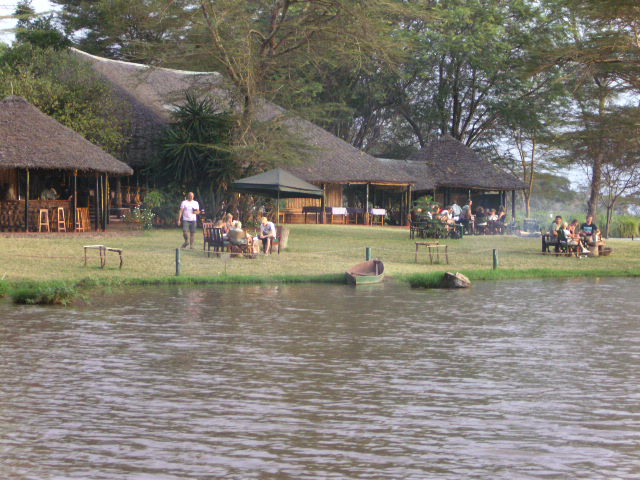
Nearly a century later, the military base is a relaxed tented camp under the Heritage flagship where the former ranch has been turned into a wildlife sanctuary expanding the range for wild animals from Tsavo West national park.
At the crack of dawn the birders are out to catch the first bird to leave the nest. Everything looks fresh – the grass with the dew, the lake so calm with water flowing through and the crocs lying so peaceful.
The ranger, Mwalimo Mwashighadi accompanies me with his ‘simi’ for a walk around the lake for you aren’t allowed to walk without a ranger. It’s an advice to heed.
Open jaws
The hippos with their tiny pink ears showing are back in the lake after a night of chomping between the tents and beyond. Nostrils give away the crocodiles in the water.
Two are sunning themselves by the banks with mouths agape waiting for the birds to clean their jaws. Gleaming white bones of a young elephant, which died in the previous year’s drought, lie on the dry earth.
A Water Thicknee raises a fracas as we near her nest on the ground. It’s a single spotted egg – the size of a chicken egg – lying in the midst of elephant dung.

We move away and watch for it to return. “It will not come straight for the egg because that will reveal it. Instead the bird will stay around it to distract what it thinks is a potential predator,” says Mwalimo.
He points to the crocodile’s nest in the ground, now abandoned. There are almost 50 of these dinosaurian reptiles in the dammed lake. But it’s the bird life that is so profuse; pied kingfishers jack dive in sight of the crocodiles.
Dainty jacanas wade lightly on the floating leaves. Hundreds of wild geese and ducks life off in the warming air to perch on the tall acacias while the sophisticated Crowned cranes fly in.
A new friend who is enjoying the morning walk poses for a photograph with the open-jawed crocodile in the background (he’s a safe distance away). I get him in the frame with the crocodile looking like its got him in its open jaw when suddenly there’s a flurry of activity and in a second, the crocodile has disappeared and the camera’s flown out of my hand.
But l got the shot and no matter how dead a crocodile looks never ever approach it on foot because it can move like lightening. Our crocodile dashed for the lake on hearing the click of the camera.
More than an hour passes as we enjoy being in the wilderness and return for breakfast. The show continues with the hippos snorting and then the African fish eagle, resplendent in coats of molten lava and white fronts sweep over the lake with talons outstretched to catch their breakfast.
It’s the most entertaining breakfast with the duo so graceful that breakfast lingers longer than it should. But then the elephants wander by and we abandon breakfast to climb the wharf where in the reeds a mother hippo guards her newborn babe – it’s cute like most babies.
The elephants keep on grazing. The breeze ruffles the branches and the grasses but the clouds keep the curtain on Kili with Mawenzi completely invisible.
Article by Rupi Mangat, rupi.mangat@yahoo.com Reproduced Courtesy of Nation Newspapers. All rights Nation Media Group Ltd. As appeared on Saturday Magazine, 20th November 2010