Showing posts with label Eburru. Show all posts

22 May, 2018

Masai Mara Occurrence 2


Weather

Very wet, heavy rains.  It gets sunny in the morning followed by thunderstorms in the afternoon. Nevertheless there have been some spectacular sunsets and sunrises and on some clear nights, the moon rise.

Temperature:  12ºc -18ºc.


Wildlife

Fantastic.

The park is lush with grass and all the watering holes are full. The elephants are having a great time with big herds that have never been seen before including the big bulls with big tuskers who we believe are not resident in the park but come from the Nyakweri forest on top of the Oloololo escarpment north-west of Mara Intrepids and Mara Explorer Camps.

There are also many female elephants with some very young calves.


Buffalos are also having a great time and most of them are with calves. There are hundreds of them around.


The smaller antelopes like the Thompson gazelles, Grants gazelle, impalas, and the topi have moved to higher grounds where the grass is a bit shorter. It’s safer for them.
For bird watchers this is a very good time.  The Widow birds are in breeding plumage. Easily seen are Pin tailed whydahs, European white storks, White-faced whistling ducks with ducklings, Saddle-billed storks, and Secretary birds.


Predators

Lions

Olkiombo Pride
It is slowly falling back to its original territory along the Talek River. The pride has been moving to the north where the grass is shorter and easier to hunt. The lions have attacked some cows from the herders in the park. The dominant males, Maridadi and Kaka are still in charge of the pride.


Ridge Pride
Intact with Blacky and Lipstick in charge.
The pride is still at Topi Plains on the northern side of Rhino Ridge.
The grass is taller here so the lions are having a difficult time hunting. But they have had some success with warthogs and topis.


Enkuyanai Pride with Oloolpapit and Olbarnoti are doing okay. It killed a buffalo on the eastern side of Ntiakitiak River and devoured it in three days.
It then moved back across Ntiakitiak River and is now at Kaboso trying to hunt zebras.

Leopards
Bahati seems to have separated from her cubs. She was last seen mating with one of the resident males along the Olare Orok River. She may have another litter sometime in August.


Bahati’s cubs Hatari (male) and Bella2 (female) named after her great grandmother Bella are doing very well, hunting smaller prey like baby impala.

The Kaboso female is also doing great with her cubs in their territory along Kaboso River and Nkorbob. The river is very high and impassable but when we managed to cross the river, we saw them with a warthog up on a tree.


Cheetahs
The five male cheetahs are at Maji ya Fisi. They were last seen with a female cheetah named Nora after which they separated from the female.

They moved across the Talek River into Olare Orok Conservancy but didn’t stay long there because of the number of domestic cows that have been allowed to graze in the conservancy.

Imani has lost three of her four cubs. She is trying very hard to protect the surviving cub. They crossed the Talek River in late April and are around Murram ya Fig Tree and Lugga ya Njoroge.  Imani has been successful in hunting on several occasions.


Malaika’s male cubs are around Rekero and Lugga ya Ndege, trying to hunt, getting better by the day.

Sightings by Raphael Koikai, head driver-guide

14 March, 2017

GRVL Fun Facts

Trees/shrub

Common Name: Broad-leaved Croton

Swahili Name: Mfurufuru


Usage and treatment

Part used: Leaves, fruits, seeds and stem
 Attractive tree often planted to provide shade in plantations
 Stabilizes and enriches the soil
 Seeds are used as a fish poison
 A vegetable salt is prepared from the ashes of the burnt leaves
 Most parts of the plant are used to treat various conditions
 The juice from the leaves is used as an anthelmintic to rid the body of parasites and toxins
 A root decoction is used as an anthelmintic for tapeworm
 The juice is also for dealing with skin problems, applied on wounds to hasten clotting and treat sores, warts and ringworm
 The leaves or young shoots are eaten to treat fever and oedema
 A boiled leaf decoction is drunk, or the ashes taken orally, as a treatment for cough
 A decoction of the young leafy shoots, combined with Justicia schimperiana, pepper, butter and milk, is used in the treatment of jaundice, and for an eruptive disease resembling small-pox
 An extract of leaves is used against itchy scalp, as a purgative, to treat malaria and venereal diseases
 The bark is an ingredient for effective purgative and vermifuge
 The seed is eaten to procure abortion
 A preparation of the seed is instilled into the ear as a remedy for ear-troubles
 The crushed leaves and seed mixed are drunk in water as a remedy for tapeworm.

Fun fact:
 Eburru forest has diverse habitats
 It’s home to 188 known species of birds
 Here are some of the most beautiful ones

Doherty's bush shrike

Eastern double-collared sunbird   
By Kilonzo, senior naturalist at the Great Rift Valley Lodge

25 April, 2014

Wildlife Thrives In Naivasha


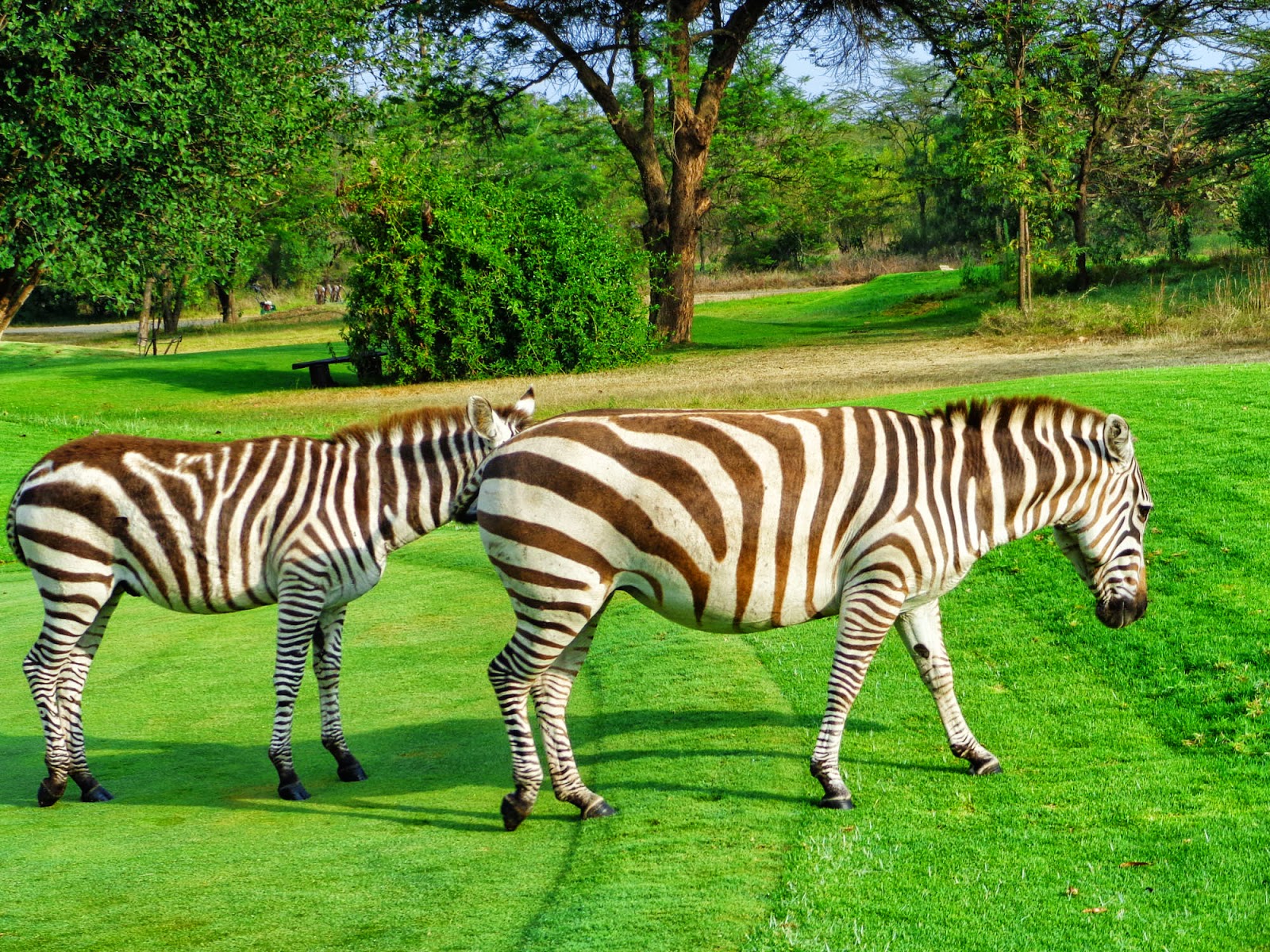
All five zebras at the Great Rift Valley Lodge and Golf Resort are in good shape. They love the golf course and they have to be constantly shooed away for they love to wallow in the bunkers and destroy the greens with their hooves.


Pili, who is 14 months old is the only zebra who is injured. He hurt his right hind leg recently and was treated by KWS vet. He is improving but limping and although he does not suckle anymore, he follows his mother around.

The Migration In Naivasha

The Maasai Mara is famous for wildebeest but now on Crescent Island in Naivasha, there are herds of them and they move on the Island just as they do between Mara and Serengeti.


Crescent Island is also home to many other plains game like impalas, zebras, Grants’ gazelle, Thomson’s gazelle, waterbuck and others. It’s all the more reason to visit it while you’re staying at the Great Rift Valley Lodge and Golf Resort.


Crater Lake
Crater Lake near Lake Naivasha in the Great Rift Valley is home to a diversity of plains game and birds. When they are not nesting at Lake Natron in Tanzania, flocks of flamingos fly in to feed on the rich algae.


The lake is only 18 kilometers from the Great Rift Valley Lodge and ideal for day excursions. It’s great for hiking. A walk around the rim of the crater takes two hours. From the southern part of the crater you can see Lake Naivasha and Lake Oloiden which are just 100 meters apart. This is a game sanctuary that is worth visiting for the panoramic views and wildlife.


Heritage Hotels (Kenya) manages The Great Rift Valley Lodge and Golf Resort in Naivasha, just an hour an a half's drive from Nairobi. The lodge is famous for one the longest holes in Kenya - the par 5 -  17th ‘signature’ at 598 metres (654 yards)!
 ©Heritage Hotels Ltd, Kenya.