23 February, 2012

Notch & Sons Reign Supreme - Masai Mara

Overview

The long rains from October 2011 to January this year has much of the Mara covered in tall grass, which has forced the plains game to look for the tender shorter grass.


The rains stopped a month ago and the Mara is dry with midday temperatures soaring to 30 degrees Celsius. Due to the dry heat and thirst, most animals converge at the water holes along the streams and rivers. The dust in the air has created a filter that makes the sunrise and sunset very spectacular. Nonetheless there’s still a lot of game around.

Migration of The Resident Wildebeest and Zebra

 
The wildebeest and zebra from Aitong have flooded the Topi Plains because it’s green. The herds are passing through the Marsh and the Mara North West conservancy, moving towards the eastern part of the Rhino Ridge. They are with the young foals as this is the calving season. However their young are preyed upon by hyenas and lions at Bila Shaka and Topi Plains.


To the south of the Mara Intrepid Camp, there are a lot of topi and gazelle herds grazing on the short, sweet grass south of the Talek River. 


THE BIG CATS
Lion

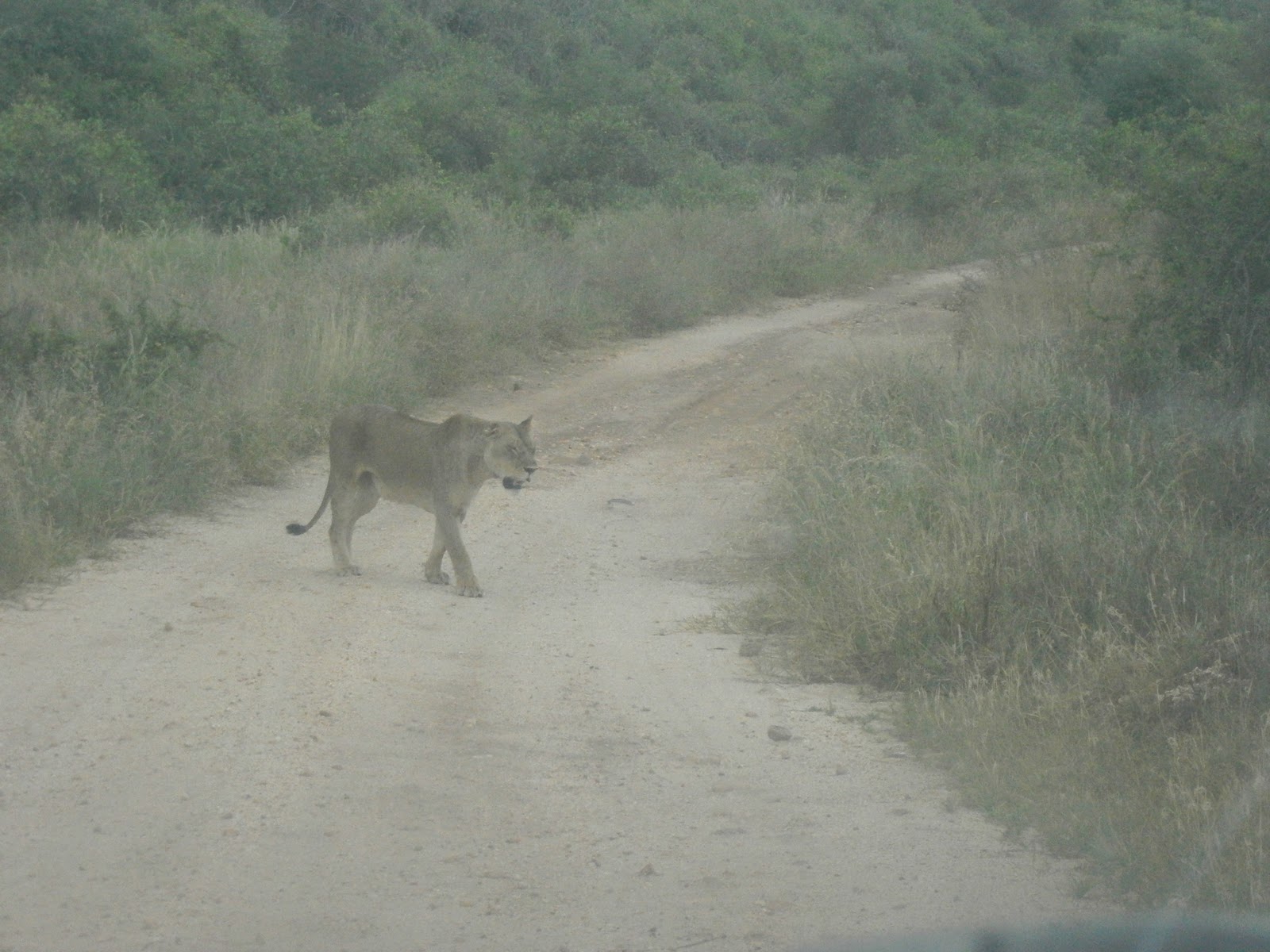
Lion sightings are good with many interesting happenings.

Notch and his pride are trying to dominate the whole of the eastern part of the Mara reserve. Cheza, Sala and Junior of the former Olkiombo pride took over the Maji ya Fisi territory.

Junior unfortunately was killed by the three nomads who cornered him while Cheza and Sala were patrolling their previous territory and checking on the females who did not follow them to the Maji ya Fisi territory.

A week ago Notch and his pride of five male lions invaded the territory and killed seven cubs aged two and three months after overpowering the two males who were in charge of the pride and territory. The two males fled south and their destination is unknown.

The five males are now in command of the five different prides in the eastern part of the Mara – that is the Olkiombo pride, the Olkeju Ronkai south of Mara intrepid camp, the Ridge pride west of Mara Intrepid Camp, the Paradise pride west of Mara Intrepid Camp and the Maji ya Fisi pride east of Mara Intrepid Camp.

The Olkiombo females are not stable because the males are not spending time with them. They have been trying to mate for the last five months after their cubs were eaten by Notch’s pride. The Ridge pride and the Olkeju Ronkai pride seem to be doing well for the male are spending a lot of time with the females.


Leopard

Around our game viewing area, leopard sightings are always good. Olive, our famous leopard has brought the cubs out of cover to the Olare Orok Smelly Crossing. Bahati is still together with its mother feeding with her whenever she makes a kill. 


Cheetah

Cheetah sightings are getting better compared to the previous weeks. At the Olkiombo Plains, we have a young female cheetah that loves to climbs vehicles. There’s another female with a cub of seven months in the same area east Mara Intrepid Camp about four kilometers from the camp.
Honey’s two boys are at Paradise Plain south of the Marsh area.  


Heritage Hotels (Kenya) manages two luxury camps in the Masai Mara - Mara Explorer and Mara Intrepids - in the confluence of the four game viewing areas of the Masai Mara. The camps are on the banks of the Talek River, with most tents spread along the banks.  Report and pictures by Guides, Mara Intrepids Camp ©Heritage Hotels Ltd, Kenya.http://www.heritage-eastafrica.com/

01 February, 2012

Boxing Day Special at Voyager Ziwani by Tsavo West National Park

On Boxing Day, l joined four couples staying at the lodge for a game drive in Tsavo West. We did the usual - the Shetani lava flow, Mzima springs followed by a picnic lunch at the awesome Poachers Lookout that gives a 360-degree view of the enormous terrain.

The game drive was exciting for the guests with towers of giraffes, herds of zebras, long-necked gerenuks standing on their hind legs to browse on the taller shrubs, elephants and many other herbivores of the plains.

The guests were – as for those who visit the Tsavo for the first time – excited to see all this but Sam (one of the guests) wanted to see a lion, since he had never seen one in the wild. He was getting a little downcast because it was nearing the end of the game drive and we were on our way back to Voyager Ziwani.

It began to rain as we crossed Kitani River – and then we saw what Sam had been wishing for all along - a lion - not far from us. The excited group clicked away delighted at the sighting and we drove off.

But that wasn’t all. Two kilometers from the lodge, we were in for another surprise. This time – the most elusive cat of all – the leopard. Perfect view and tons of pictures later, we arrived elated at the lodge.


It was the perfect end to a game drive and we hope to have more exciting luck in 2012.

Stephen Lekatoo

Resident Naturalist at Voyager Ziwani

04 August, 2011

Wild Dogs Hunt - Gone in Seconds!

The old adage about keeping your camera close while on safari in Africa (or anywhere else for that matter), came true the other day while on a transfer from the Samburu Intrepids camp to the airstrip in Buffalo Springs. I always like carrying my camera in a separate bag (from other baggage) so I can reach for it quickly if need be.

Well, this was a normal unexciting trip to the airstrip from Samburu Intrepids - a 15 minute drive - when coming round a bend to cross a lugga (dry river bed), we came across what at first sight we though was a did dik running for his dear life from a pack of wild dogs (Cape hunting dogs). It was in fact, a baby gerenuk. The signs were ominous immediately - he stood no chance. In a desperate dash, he tried to get away from the leader of the chasing pack by running under our jeep, and sadly hit his head in the under carriage. By the time the driver had stopped, just some five meters away, he lay kicking on the ground with some blood oozing from his head - he had either broken his neck or something vital.

Mercifully, he wasn't in pain for long - in a flash, the leader of the hunting dogs, who had himself avoided hitting the vehicle by a whisker was on him. The rest of the pack which had spanned out in the bush landed in a matter of seconds. Just as i was reaching to grab my camera - which was in a bag on my lap - it was over. These were the sequence of shots taken in less than a minute, and what transpired.
The pack tears the baby gerenuk mercilessly

And splits him in two

They fight for the spoils


It's all done

Someone got a good morsel..


NB This pack of wild dogs has become common in Samburu, with our blog featuring them severally. They seem to have adopted a new survival tactic; taking up to the hills once they have fed where they are away from bigger animals or humans, and their numbers seem to be increasing.


They were once hunted viciously (and mainly) due to human's distate to their hunting methods and lack of specific prey - they don't normally strangle a kill like other bigger predators but instead tear it apart while still alive, like what is shown in these pictures, which humans find cruel. They have also hunted and fed on livestock, bringing them in conflict with pastoralists with whom they share common areas. These pastoralists used to poison or hunt and kill, making them an endangered species.

Heritage Hotels (Kenya) manages one luxury camp in the Samburu National Reserve - Samburu Intrepids Camp - on the shaded banks of the *Uaso Nyiro. All the tents are spread along the banks with a private shaded verandah with a nice view of the flowing river.  
* Also known as Ewaso Nyiro, Samburu for 'the brown river'. 

Report and pictures by Ndeithi Kariuki.©Heritage Hotels Ltd, Kenya.http://www.heritage-eastafrica.com/

27 July, 2011

Gnu for Lunch Anyone? News From The Wild

Overview

It has stopped raining in the Mara, making the grass turn coarse like hay. Only the valleys and river banks are green, attracting the grazers that prefer shorter grass. You can see them early mornings on the plains while the grass is still soft and moist from the morning dew but as the day gets hotter they move to the river banks to graze.
Time for a drink before crossing - zebras are usually the head of the migration.

The areas that were first visited by the herds of wildebeest and zebra have very short grass stalks and are dusty. It’s only the gazelles that can plug the stalks.

All the rivers and the water pools are full, providing water for the herbivores, especially now to help digest the coarse grass.

Migrating Herds

The advance herds are by the rivers, paving the way for the big herds. They have left little for the others to graze along the migratory corridor.

The corridor extends from Sand River gate all the way to the Marsh on the eastern part of the reserve and further in to the conservancies like Olare Orok and the Mara-West.
Crossing points are chosen for many reasons

Safety being paramount - you never know who's sneaking up on you!

This lioness wanted gnu for lunch


After making a stop at the Marsh, the herd turns towards the Mara River to their traditional crossing. It’s exciting to watch the first herd of the migration.

This year they avoided the western part of the reserve and decided to follow the edges of the reserve east up to the Marsh.

Traditionally, the Serengeti herds cross Sand River from the south then break into two groups - one going east and one going west towards the Lookout Hill. A few herds will trek direct to Posse Plain and cross Talek River near Mara Intrepids Camp going through Olkiombo Plain and across to Olare-Orok at the Smelly Crossing and up stream at Double Crossing to reach the Topi Plain through Rhino Ridge, down to the Mara River through Paradise Plains. Those who pass through the Lookout Hill, will cross Mara River just below the hill, to get to the Mara Triangle.
This poor fella was trapped under an unfortunate gnu who's inside the jaws of on a Nile croc

This year, the herds have been crossing the Mara River at Kichinjio where many wildebeest have died. They then head towards Rhino Ridge, Base and Shamarta which are the wildebeest camping areas and ancestral calving sites.

The wildebeest follow the zebra, who explore the new areas first. However the wildebeest take a different direction from zebras who are going east to the Ngama Hills near Sekenani, for zebras prefer the taller courser part of the grass.


PREDATORS SIGHTINGS

LIONS

Lions sighting are good and food is abundant. Still the families have not come together as usual when the migration is on.

Lion prides do restructure their family units after separating for some time to avoid food competition.

Notch and his four sons still dominate a section of the Mara and continue to mingle with the Marsh Pride and the Olkiombo Pride. The vultures circling in the air point to where the predators are feeding on their prey or where the wildebeest and other animals have succumbed to death.

LEOPARDS

Olive and her two cubs of different ages are at the Base lugga with a wildebeest kill.

CHEETAHS

The three brothers moved to Olare Orok Conservacy. Shingo the mother of six cubs, is east of Mara Intrepids Camp. Two young expectant females are at Bila Shaka and Topi Plain. Saba and her young male cub are at Musiara. A young female cheetah gave birth six kilometers from Mara Intrepids Camp towards Fig Tree.

Heritage Hotels (Kenya) manages two luxury camps in the Masai Mara - Mara Explorer and Mara Intrepids - in the confluence of the four game viewing areas of the Masai Mara. The camps are on the banks of the Talek River, with most tents spread along the banks.  
Report by John Parmasau, Senior Guide, Mara Intrepids Camp. Pictures by Dixon Chelule, Paul Kirui and John Parmasau.©Heritage Hotels Ltd, Kenya.http://www.heritage-eastafrica.com/
18 July, 2011

Zebra Gets Briefs Torn By Crocs - The Migration is On!

Overview

Mara is green and lush following the rains. The tall golden grass is interspersed with short patches of grass, which are littered with white waste-paper tissue flowers. The ravines and rivers are as yet not full of water and therefore easy to traverse.

The predators are having an easy time hunting due to the increase in herbivores. With the danger lurking in the tall grass, the herbivores are moving to the north-west conservancy and the Olare Orok Conservancy, up to the east of the reserve where the plains are covered with short grass. These are the routes taken when migrating from the Loita Plains via Aitong.

Wildebeest Migration

The wildebeest are in the Mara having crossed Sand River in large herds. They are showing signs of separating. Some are facing west around Roan Hill towards Mara Bridge. South of Look Out Hill another group is facing north towards Meta Plains, Central Plains and Possee Plain, which are south of Mara Intrepid Camp.

The herds look healthy because of the palatable grass. They are busy ranting - chasing each other around and the males are trying to keep the females. The males fight using their horns as weapons to win dominancy. The calves are healthy. The migration towards the Mara River is slow due to the rains in the southern part of the reserve - the grass is moist and the natural pools full of water. Hence it’s safer for the wildebeest to drink from the pools than trekking to the crocodile-infested Mara River.

The perils of the crossings are highlighted - in a small way - in the dramatic pictures below. John Kerore Parmasau, one of our Senior guides at Mara Intrepids captured when a hapless zebra was staring death in the face - rump if you may - and lived to bray it!

Blood oozes from a cut where sharp canines from the huge jaws of Nile crocodiles bit


The wildebeest on this bank think twice about crossing as they follow the unfolding drama

Our champ has fought the good fight..

And has a huge scar to show..

Just some torn briefs. Could 've been worse!

Looks like someone up there answers bray-ers.


Big cats sighting

Lions

The lions are all around the Mara Intrepids Camp. Notch and his son continue to dominate the largest part of the reserve. The Olkiombo Pride and the Marsh Pride are still controlled by the male pride.


Leopards

Olive and her two cubs of different ages (Kayoni and the young female cub) are regularly seen between Mara Intrepids Camp and Rekero Camp. Pacha is back with his mother. The four were seen with a warthog kill west of Mara Intrepids Camp.
Big Boy relaxing
Olive also tried to hunt a young giraffe north of Olkiombo airstrip but the mother rescued it. However the foal sustained serious injuries on the neck and throat.


Cheetahs

The three brothers moved to Olare Orok Camp.
Shingo, the mother of six cubs is east of Mara Intrepids Camp.
Two young expectant females are at Bila Shaka and Topi Plain.
Saba and her young male cub are around Musiara.
A young female cheetah gave birth six kilometres east of Mara Intrepids Camp.

Others


The Mara ecosystem is thriving. Food is aplenty, and this is the ideal rutting season for most animals. Game viewing is also good, with a variety of birds and animals easily spotted.


Heritage Hotels (Kenya) manages two luxury camps in the Masai Mara - Mara Explorer and Mara Intrepids - in the confluence of the four game viewing areas of the Masai Mara. The camps are on the banks of the Talek River, with most tents spread along the banks.  
Report by Dixon Chelule, Assistant Head Guide and John Parmasau, Senior Guide, Mara Intrepids Camp. Pictures by Dixon Chelule and John Parmasau.©Heritage Hotels Ltd, Kenya.http://www.heritage-eastafrica.com/

05 July, 2011

Game Goes On A Drive!


Guests at Mara Intrepids got more than they had bargained for on a game drive recently. A young cheetah, Shingo, decided to hop on to the jeep - let's just say, the guest were game!


The young leopard was also very obliging for a photo shoot.


Pictures courtesy of Edwin Mirara and Dickson Chelule, Mara Intrepids. The video is property of MrSimbaMara