Showing posts with label Tsavo West. Show all posts

14 July, 2016

Tsavo West Sightings

The week of 11th July 2016 was interesting and seeing a lot of wildlife coming closer to the camp.This is due to the drought season. Elephants started coming earlier than expected to the river and spend the whole night feeding on reeds. 


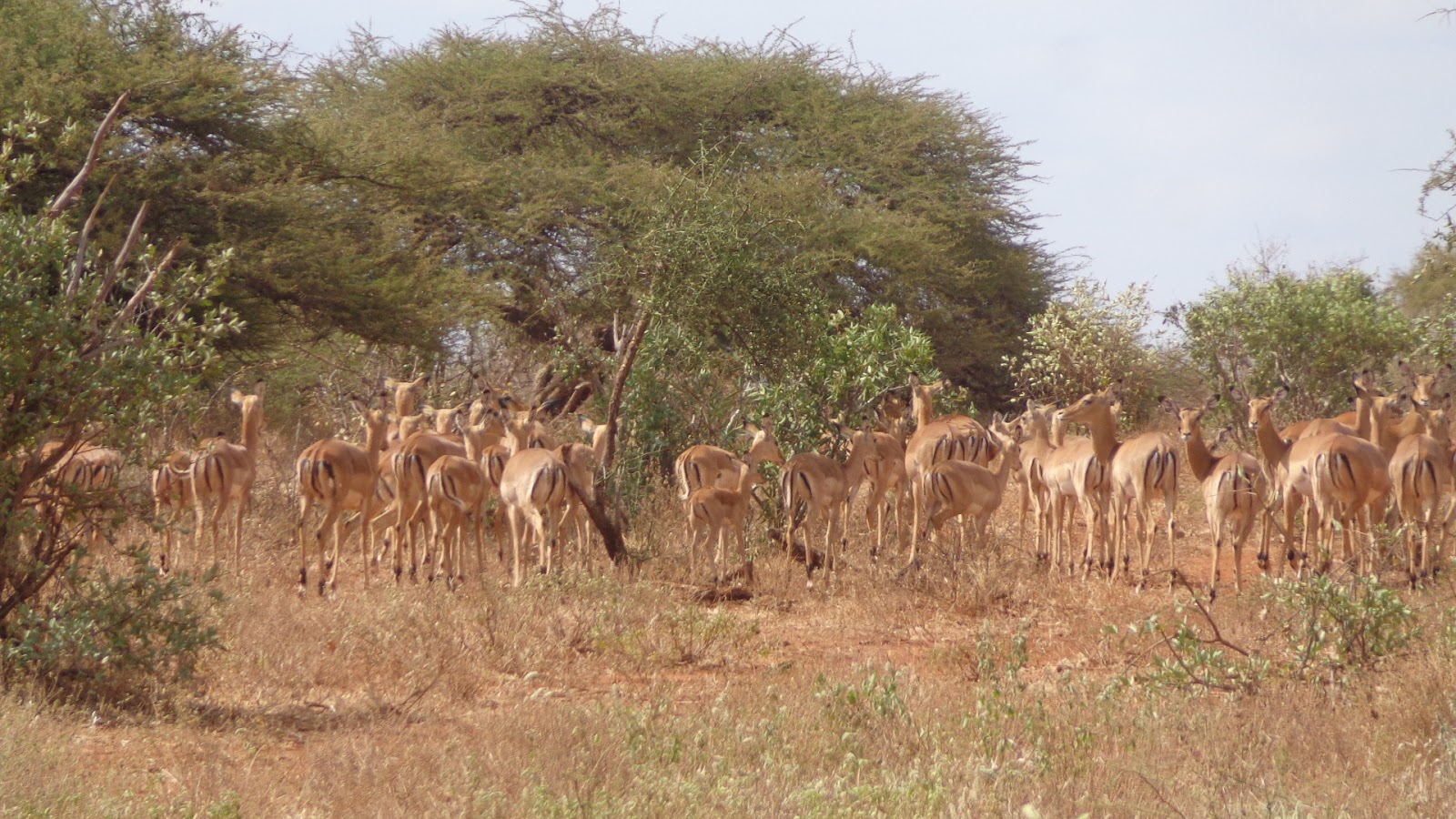
The Impalas arrives in the camp as early as 6 pm. Our guests enjoy watching them in between the tents. Impalas decrease their chances of attack when living in herds. They leap and scatter in all directions when being attacked to confuse the predator. The impala is rarely seen on its own. Females and young animals form herds of up to 100 individuals, while males live in a bachelor group of about 60 animals. They occupy a large range and make seasonal migrations from high to lower ground according to the availability of suitable food.


The number of warthog have also increased as per our observations. Mostly, Warthogs sleep and rest in holes, which at times they line with grass, perhaps to make them warmer. Although they can excavate, warthogs normally do not dig holes but use those dug by other animals, preferably aardvarks. They also protect themselves from predators by fleeing or sliding backwards into a hole, thus being in a position to use their formidable tusks in an attack.


Report and pictures by Stephen Lekatoo.

15 July, 2013

Morning Encounters, Voyager Ziwani, Tsavo


I started the usual morning nature walk with our guests Jennifer and John and headed towards the plains. As we were crossing the airstrip, I heard elephants trumpeting. I thought the elephants were crossing the river into Tsavo West National Park and we rushed to see them. We spotted the herd from a distance and they were feeding on the acacia trees.

Close to the plains, we saw lion spoor. The lion must have walked early morning. Looking at the plains, there were elands, wildebeest and zebras. They seemed nervous and l guessed it must be because of the lions. 

As we turned toward Sante River, I spotted an orphan baby elephant walking alone towards Ziwani Camp. I immediately called the David Sheldrick Trust in Nairobi to report the this because a baby elephant on its own means it must have got separated from the herd and was lost.

On the second day, we left with picnic boxes for the Shetani Lava and Mzima Springs with a game drive en route. We saw a lot of wildlife, mainly plains game, but only the spoor of the cats. After a picnic lunch at Roaring Rocks which has a superb view of the Ngulia valley, we returned to camp late in the evening.

The following day, we started very early in the morning because Jennifer and John were leaving for Europe. It was their last day in Kenya. After crossing the Kitani River, we saw a male leopard walking majestically and growling to announce that this was his territory. “It’s my first time to see a leopard on the ground,” exclaimed John. It was a perfect finish to their holiday in Kenya.


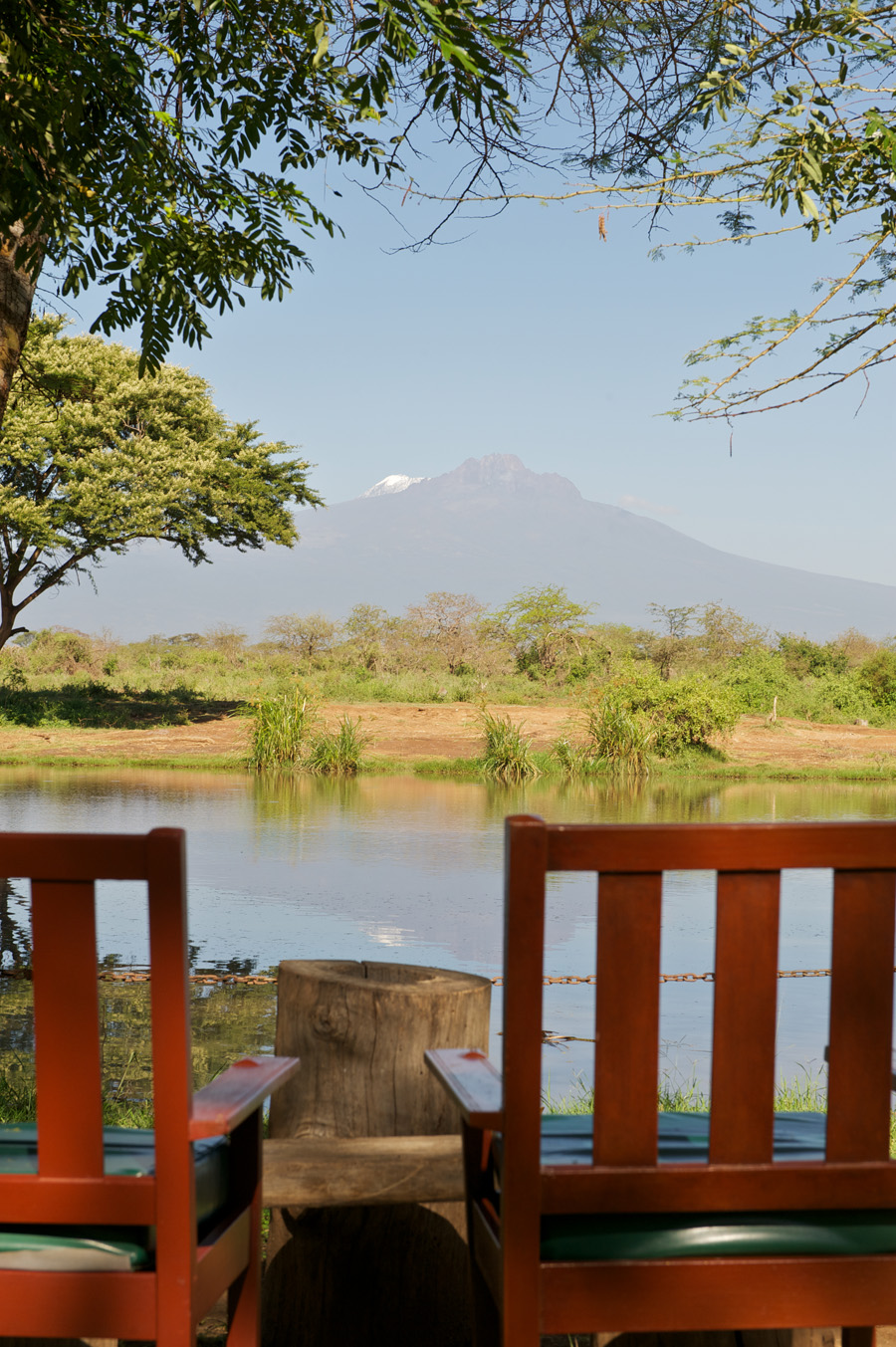
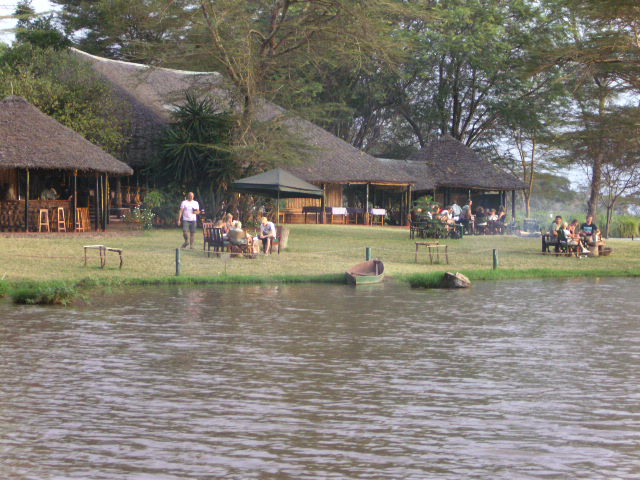
Heritage Hotels (Kenya) manages one luxury camp on the western edge of Tsavo West National Park - Voyager Ziwani Camp. Located on a private sanctuary on the western edge of Tsavo, the camp sits on a secluded dam on the Sante River – home to turtles, crocodiles and hundreds of basking hippos.   Reports and pictures by Stephen "Chameleon" Lekatoo, Voyager Ziwani Camp ©Heritage Hotels Ltd, Kenya. http://www.heritage-eastafrica.com/

22 June, 2013

Wildlife Thrives in Ziwani, Tsavo West

BIRD WALK AROUND SANTE RIVER

Seen during the recent bird walks around Santé River are Knob-billed Ducks (Sarkidiornis m. Melanotos) back from Lake Jipe, Spur-winged Geese (plectropterus g. gambensis) and Egyptian Geese (Alopochen aegyptiacus).


CROCODILE PREDATOR
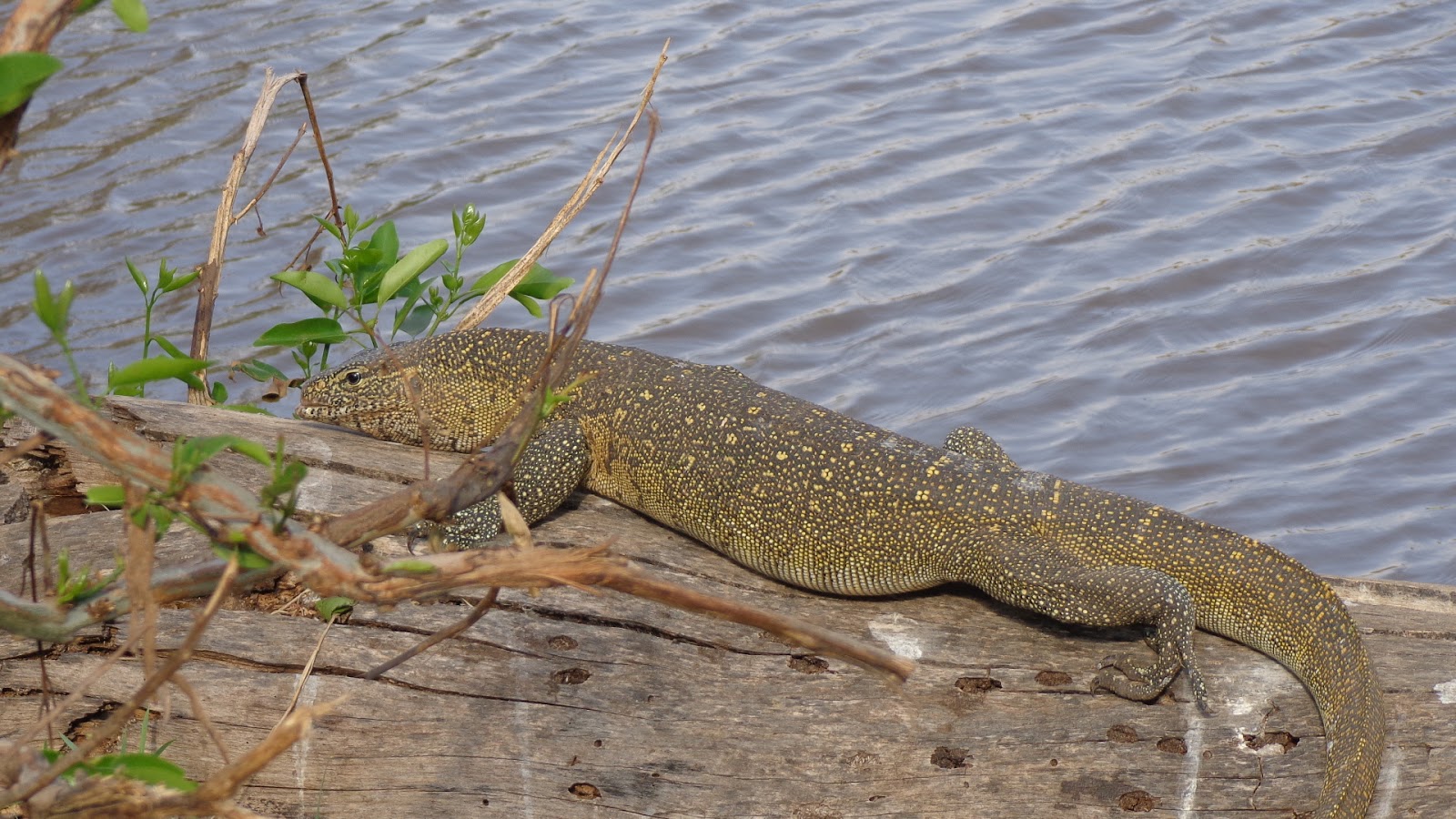
The Nile monitor (naranus niloticus) is Africa’s largest lizard and a powerful swimmers.
Two years ago, I watched a female crocodile transfer her young ones to shallow waters and as soon as she left, a monitor lizard made haste to feast on some of the new hatchlings.
A few days ago, l watched once again a Nile monitor lizard plunder a crocodile’s nests while the female was away. Our guests were amazed to watch the raid in the wild.


SNAKE EAT SNAKE
Recently, we saw a Sand snake devour a green-coloured water snake. A few days later we saw a Stripped sand snake (Psammophis Subtaniatus Subtaniatus) on a termite mound while on a nature walk.


Lesson: Never sit on abandoned termite hills because they can be occupied by snakes.
On a later nature walk, I spotted an African rock python in the act of swallowing a Hadada Ibis on the River bank. The guests were very excited to see this rare sighting.


HIPPOS BIRTH PEAK
The oncoming rains were the start of the calving season for the hippos as conditions were perfect - plenty of fresh grass to graze on. The hippo cow moves away from the herd when she is ready to calve and gives birth in shallow water or close to the river bank.


We were lucky to see a cow gave birth by the Camp’s fishing platform in full view of our guests during 
breakfast.

We hope our resident hippo population will recover from the drought of 2009, including surviving the crocodiles.

JUMBOS OF LAKE JIPE
A visit to Lake Challa and Lake Jipe revealed lots of elephants in Jipe feeding on the reeds. While photographing them, we noticed a female without tusks. I wonder – could this be a new species coming up?


MAN EATERS OF TSAVO
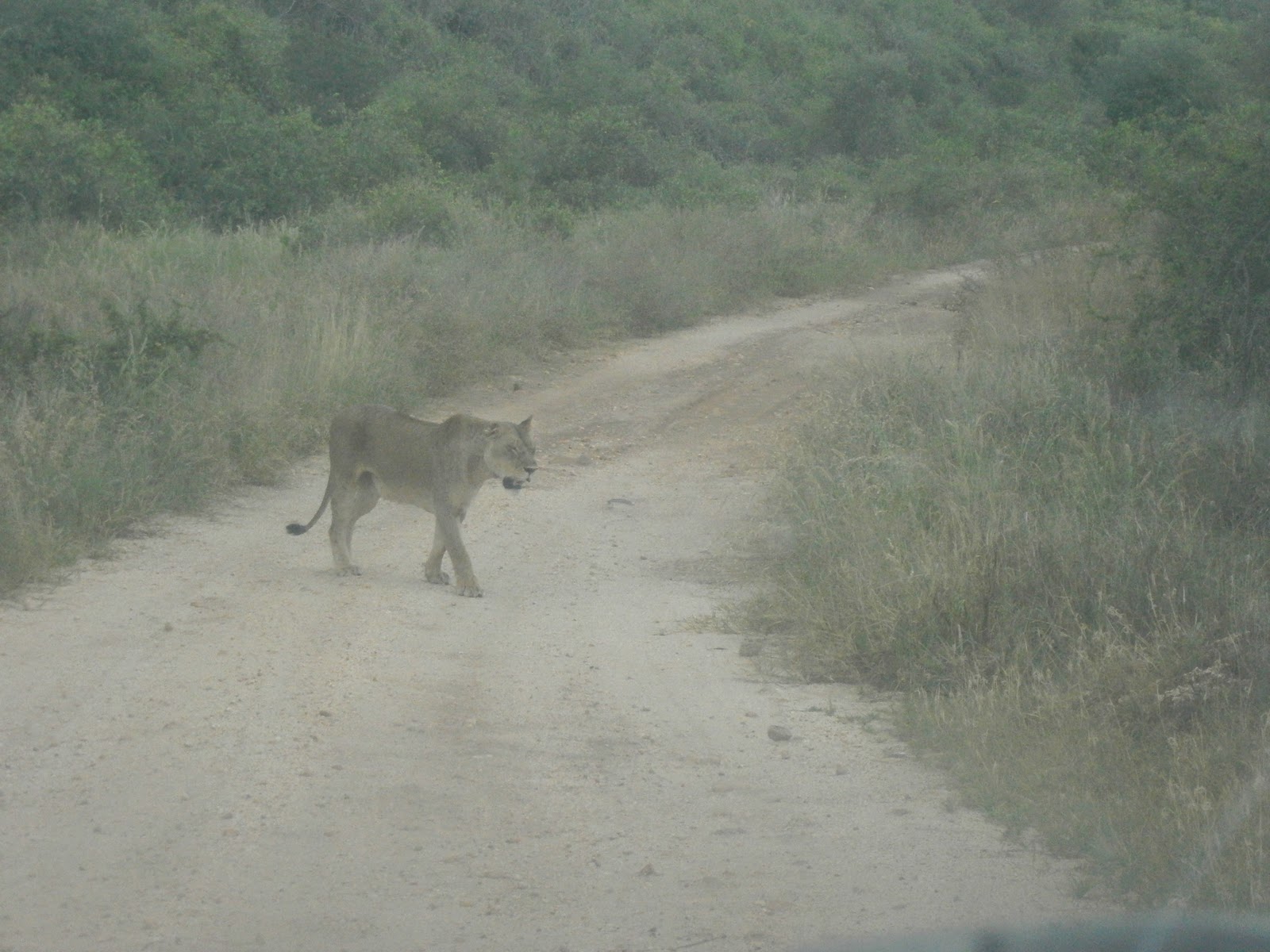
On a night game drive, action started at the main gate with two bush babies chasing each other, the nocturnal ant-eating aardvark on the grass plains and at Lake Solomon a lion crossing the road.


Heritage Hotels (Kenya) manages one luxury camps on the western edge of Tsavo West National Park - Voyager Ziwani Camp. Located on a private sanctuary on the western edge of Tsavo, the camp sits on a secluded dam on the Sante River – home to turtles, crocodiles and hundreds of basking hippos.   Reports and pictures by Salim Ibrahim & Stephen "Chameleon" Lekatoo, Voyager Ziwani Camp ©Heritage Hotels Ltd, Kenya. http://www.heritage-eastafrica.com/

13 March, 2012

Night Out With The Genet Cat In Tsavo


There's something special about a night game drive. We started out at  7.15 pm. I had my massive light and beamed it from right to left and back again through the dark night.

The guests were standing in the safari cruiser, smiling and eager to see the wild animals. At the air strip there were lots of Impalas. The male was chasing the females, trying to herd them together. We continued and came across two zebras and two buffaloes in the distance. Returning to the lodge after seeing more plains game, we saw the hippos along the river, grazing.


But it was the genet that impressed the guests most. It looked like it had hunted a mouse. It stood still for a minute before dashing into the grass. The guests were really happy because it was the fast time to see the genet.

Fun facts:
  • Genets are related to cats, civets, linsangs, fossa and mongooses. 
  • They are normally nocturnal but can be seen during the day, especially in wet seasons.
  • Known to be arboreal but hunt on the ground as well.
  • Omnivorous, feeding on small animals (rodents, bats), birds, birds' eggs, frogs, millepedes and some plants/fruits.
  • Have semi-retractable claws for climbing and holding prey.
  • Mostly solitary except during courtship or when a female is nursing young ones. Females may have up to 2 litters a year, with two to four kittens born.
  • Lifespan of about 8 years, with maturity at about 2 years.
  • Mostly found in Africa. 
  • They can squeeze their bodies whenever their heads fit!
  • Genets will arch their back, much like a cat when in distress! They purr, hiss, spit and meow as well.

Heritage Hotels (Kenya) manages a luxury camp, Voyager Ziwani Camp, on the western edge of Tsavo West National Park. Located on a private sanctuary on the  of Tsavo West National Park. It is 257 kilometres from Nairobi via the Nairobi - Emali – Loitokitok – Njukini route, or 273 kilometres from Mombasa via the Voi – Taveta route. The camp has a private airstrip where private charter can be arranged. The camp has 25 tents and borders the Sante River, where plenty of wildlife coming for a drink can be seen from the tent's verandah.  Report and pictures by Stephen Lekatoo, Resident Naturalist at Voyager Ziwani 
©Heritage Hotels Ltd, Kenya.http://www.heritage-eastafrica.com/
01 February, 2012

Boxing Day Special at Voyager Ziwani by Tsavo West National Park

On Boxing Day, l joined four couples staying at the lodge for a game drive in Tsavo West. We did the usual - the Shetani lava flow, Mzima springs followed by a picnic lunch at the awesome Poachers Lookout that gives a 360-degree view of the enormous terrain.

The game drive was exciting for the guests with towers of giraffes, herds of zebras, long-necked gerenuks standing on their hind legs to browse on the taller shrubs, elephants and many other herbivores of the plains.

The guests were – as for those who visit the Tsavo for the first time – excited to see all this but Sam (one of the guests) wanted to see a lion, since he had never seen one in the wild. He was getting a little downcast because it was nearing the end of the game drive and we were on our way back to Voyager Ziwani.

It began to rain as we crossed Kitani River – and then we saw what Sam had been wishing for all along - a lion - not far from us. The excited group clicked away delighted at the sighting and we drove off.

But that wasn’t all. Two kilometers from the lodge, we were in for another surprise. This time – the most elusive cat of all – the leopard. Perfect view and tons of pictures later, we arrived elated at the lodge.


It was the perfect end to a game drive and we hope to have more exciting luck in 2012.

Stephen Lekatoo

Resident Naturalist at Voyager Ziwani

08 February, 2011

Charming Lake Challa


A secret lake lies in a crater within site of Kilimanjaro’s towering snow-clad mountain, only we can’t see Africa’s tallest mountain because of the thick clouds.
Formed by explosive eruptions thousands of years ago, the crater-lake is fed by underground streams from the mighty mountain.
Its turquoise blue-green waters stand in stark contrast to the dry and dusty land where fat baobabs and thorny trees tough it out under a merciless sun.
Dust trails the cars driving out from Voyager Ziwani on the edge of Tsavo West national park to the secret crater-lake, driving past red-earth anthills, the shambas of the Taveta people and the turning to the hill where Grogan built his castle in 1930.
Nobody would guess what lies in the mound amidst this non-descript terrain until one reaches the rim and a burst of blue sparkles in the volcano’s crater. So secret is it that one could easily drive past it.
Even today few people visit it but historical records show that during the First World War, the allied forces marched around the northern edge in their advance on Taveta to battle it out with the Kaiser’s force.
Scrambling down the narrow path to reach the shores of the pretty pond that’s 4.5 square kilometres and 94 metres deep with the invisible line separating Kenya and Tanzania, we meet two women climbing up with fish bought from the local fishermen.
The women, are from the shores of Lake Victoria almost 800-kilometres away. On my first visit to the lake eight years ago, nobody dared swim in it for a teenage British girl, Amy Nicholls had been killed by a crocodile.
Her body was found on the Tanzanian side and brought to Nairobi for a post-mortem where it was revealed that the culprit was a croc. A local diving team spotted one a few years ago and a pair of tusks lying on the lake bed.
On closer look, the tusks were plastic used in a film shot on location. Little boys swim by a collapsed bridge which some enterprising person wanted to build to connect Kenya and Tanzania – secretly l think it would have spoiled the beauty of the stunning lake besides affecting the natural biodiversity.
Sitting on the shore of the lake, I weigh the odds of bumping into a croc. More unlikely than being hit by a car in Nairobi and none of the local guys have seen one in many, many years.
Floating on the water surrounded by the steep walls of the volcano and its forest of euphorbia and fig trees and a blue sky above, life’s a dream. A lone African fish eagle soars above to complete the idyllic picture.
Diving a few feet underwater shows the sun’s rays filter through clear water. But like everybody in the group questions, where did the crocodile come from when there is no surface river flowing into it.
Picture by ©Gurinder Sehmi

A little investigation solves the mystery. The Challa croc-culprit is no other than Grogan, one of Kenya’s most vivid colonial characters who besides building his enormous castle on the nearby hill, pioneered large-scale farming and irrigation in Taveta.
He in his wisdom, then brought some rare dwarf crocodiles as pets and had them shipped from Madagascar in the 1930s and put into Lake Challa, which lay in his 9,650-square-mile estate.
The crocs were thought to have become extinct in the lake some years ago, many killed by the local fishermen in the 1990s when the toothy reptile continually ruined their fishing nets. Maybe it was just the lone one lurking in 2002.
Article by Rupi Mangat, rupi.mangat@yahoo.com Reproduced Courtesy of Nation Newspapers. All rights Nation Media Group Ltd. As appeared on Saturday Magazine, 20th November 2010

26 January, 2011

A superb tented lodge with true sounds of nature


In the silent night, nothing shows. Yet this blanket of darkness covers a nocturnal life that shies away in the heat of the day. A barrel shaped hippo on its tiny legs makes for the bushes.

A few metres away, a pair of silver-backed jackals hunt for the night feast of insects while elephants on the bank across the river siphon water up their trunks and into their mouth.It looks comical. We spot more. A herd of buffaloes, easily a hundred gallop away caught in the beam of the powerful torch. Their eyes sparkle like fireflies, their curved horns a pattern in the darkness.
“An elephant can take in 30 litres of water in a single ‘trunk’ full,” reveals Lekatoo Ole Parmitoro, the guide from Voyager Ziwani. Doe-eyed gazelles and graceful impalas dot the plains and as the spotlight passes over them, they vanish into the darkness yet they are there.

It’s nearly midnight when we return to Voyager Ziwani, which was a garrison for the German Schutztruppe during World War 1.
Nearly a century later, the military base is a relaxed tented camp under the Heritage flagship where the former ranch has been turned into a wildlife sanctuary expanding the range for wild animals from Tsavo West national park.
At the crack of dawn the birders are out to catch the first bird to leave the nest. Everything looks fresh – the grass with the dew, the lake so calm with water flowing through and the crocs lying so peaceful.
The ranger, Mwalimo Mwashighadi accompanies me with his ‘simi’ for a walk around the lake for you aren’t allowed to walk without a ranger. It’s an advice to heed.
Open jaws
The hippos with their tiny pink ears showing are back in the lake after a night of chomping between the tents and beyond. Nostrils give away the crocodiles in the water.
Two are sunning themselves by the banks with mouths agape waiting for the birds to clean their jaws. Gleaming white bones of a young elephant, which died in the previous year’s drought, lie on the dry earth.
A Water Thicknee raises a fracas as we near her nest on the ground. It’s a single spotted egg – the size of a chicken egg – lying in the midst of elephant dung.

We move away and watch for it to return. “It will not come straight for the egg because that will reveal it. Instead the bird will stay around it to distract what it thinks is a potential predator,” says Mwalimo.
He points to the crocodile’s nest in the ground, now abandoned. There are almost 50 of these dinosaurian reptiles in the dammed lake. But it’s the bird life that is so profuse; pied kingfishers jack dive in sight of the crocodiles.
Dainty jacanas wade lightly on the floating leaves. Hundreds of wild geese and ducks life off in the warming air to perch on the tall acacias while the sophisticated Crowned cranes fly in.
A new friend who is enjoying the morning walk poses for a photograph with the open-jawed crocodile in the background (he’s a safe distance away). I get him in the frame with the crocodile looking like its got him in its open jaw when suddenly there’s a flurry of activity and in a second, the crocodile has disappeared and the camera’s flown out of my hand.
But l got the shot and no matter how dead a crocodile looks never ever approach it on foot because it can move like lightening. Our crocodile dashed for the lake on hearing the click of the camera.
More than an hour passes as we enjoy being in the wilderness and return for breakfast. The show continues with the hippos snorting and then the African fish eagle, resplendent in coats of molten lava and white fronts sweep over the lake with talons outstretched to catch their breakfast.
It’s the most entertaining breakfast with the duo so graceful that breakfast lingers longer than it should. But then the elephants wander by and we abandon breakfast to climb the wharf where in the reeds a mother hippo guards her newborn babe – it’s cute like most babies.
The elephants keep on grazing. The breeze ruffles the branches and the grasses but the clouds keep the curtain on Kili with Mawenzi completely invisible.
Article by Rupi Mangat, rupi.mangat@yahoo.com Reproduced Courtesy of Nation Newspapers. All rights Nation Media Group Ltd. As appeared on Saturday Magazine, 20th November 2010