22 July, 2010

The Greatest Game Show on Earth - Issue 6

Wildebeest Migration


One herd of wildebeest is re-entering the Mara from the southern part of Lookout Hill via Sand River after visiting the western corridor through Engiro. The wildebeest are around Talek Gate, Lookout Hill, Central Plains, Meta Plains and Olmisigiyio feasting on the succulent grass.


The herds that are grazing in Central and Meta Plains are moving towards Lookout Hill, crossing every morning towards Mara Triangle. There’s not much drama in the river between the crocodiles and the wildebeest. However the wildebeest raise a lot of dust by the banks of the Mara River.


All the herds that are in Posse Plains are crossing Talek River, west of Fig Tree Camp to Olkiombo Plains where they have never been before. The grass here is fresh and palatable. Herds of zebras are streaming in from Topi Plains because of the one-day rain that refreshed the plains. The Olkiombo Plains are becoming a meeting point for the zebras and the wildebeest.


The other herds of wildebeest, which have branched off from the herds crossing between Fig Tree and Intrepids are crossing between Rekero Camp and Naibor. There’s not much left to graze on this route because the earlier herds have grazed away most of the grass.


Walking in single files, the wildebeest walk slowly at first but increase their momentum as they reach Paradise Crossing. It is a traditional crossing used during the migration with lots of action taking place. On 17 July, a lioness in the Mara Triangle made six kills in 45 minutes. The crocodiles are also making successful kills.


The plains from Olkiombo to Topi and from Musiara to Mara-Rianda are full of wildebeest.


At this point, all the grazers are crossing into Mara Conservancy expecting fresh pasture because of the rains.


                                                                    Predators’ sighting

Lions

The Olkiombo Pride of three males has taken over the neighboring pride at Maji ya Fisi because there are no dominant males in the pride. Many females in the pride are in estrus.

The Paradise Pride is also divided after Notch and his son went to the Ridge Pride females. The Ridge Pride has had no dominant male for two years.

All the lioness hunt almost daily to provide for their cubs.
    
Leopards

Olive the leopard is still with Pacha and Kayoni, her two sons aged 13 months. They are around Take River, east of Mara Explorer, recently seen with a young wildebeest kill.


Cheetah

The three cheetah brothers are at Topi Plains hunting the young of the zebra and the wildebeest.

Paul KiruiChief Safari Guide, Heritage Hotels
(Pictures © Paul Kirui)


You can read more on
Mara Explorer and Mara Intrepids at http://www.heritage-eastafrica.com/tented-camps/

Book and pay for two nights at this property and get the third free! http://www.heritage-eastafrica.com/specials/3-for-2-safari-special/

15 July, 2010

Fun facts: Grevy's Zebra

Also known as the Imperial Zebra, it is the largest species of zebra, and is only found in northern Kenya and southern Ethiopia.

They are classified as endangered, with roughly about 16,000 still living in the wild. They have poached for their more beautiful and expensive hides, suffering encroachment by man and domestic animals on their habitats as well as harsh climates.

Found only in harsh semi-arid plains of the Acacia-Commiphora bushlands and thickets, a big number died during the recent drought in most of northern Kenya.

The species gets its name from a former French president, Jules Grevy, who was gifted by the Ethiopian government (Abyssinia) in 1880.

They are known to coexist with the common plains' zebra, but do not inter-breed. They breed all year with the gestation period being between 380 - 400 days, and giving birth to single foals. Newborns follow anything that moves and thus new mothers are highly aggressive towards other mares a few hours after they give birth. This prevents the foal from imprinting another female as its mother. To adapt to an arid lifestyle, Grévy's Zebra foals take longer intervals between suckling bouts and do not drink water until they are 3 months old.

So how do you tell a Grevy from a common zebra?
They have thinner stripes, which do not go round their bellies unlike with common zebras. This is the main distinction. They are broader on the neck, extending to the hooves, and on the rump, are as unique to each animal as our human thumb-prints!.


They are bigger in size, and weigh up to 450 kilos.
They have very large, conical bat-like ears.
Their heads are big, long and narrow, very horse or mule-like.
The manes are tall and erect, making them majestic and very 'royal-like'. They were used by ancient Romans in gladiator fights.

They are one of the special six animals of Samburu - the others being the reticulated giraffe, the Somali ostrich, the gerenuk antelope, the Beisa oryx and a late addition, the vulturine guineafowl.


Heritage Hotels operates a luxury tented Camp is the Samburu National Reserve - Samburu Intrepids Camp. You can read more on Samburu Intrepids at http://www.heritage-eastafrica.com/tented-camps/samburu-intrepids

*This property remains closed till December for renovations following the floods in March. Lookout for the re-opening announcement.

Admin, Lo'mon LeHeritage 
('Lo'mon' is Samburu for news; Le Heritage means 'from Heritage') 

12 July, 2010

Ghana wins six-a-side world trophy!

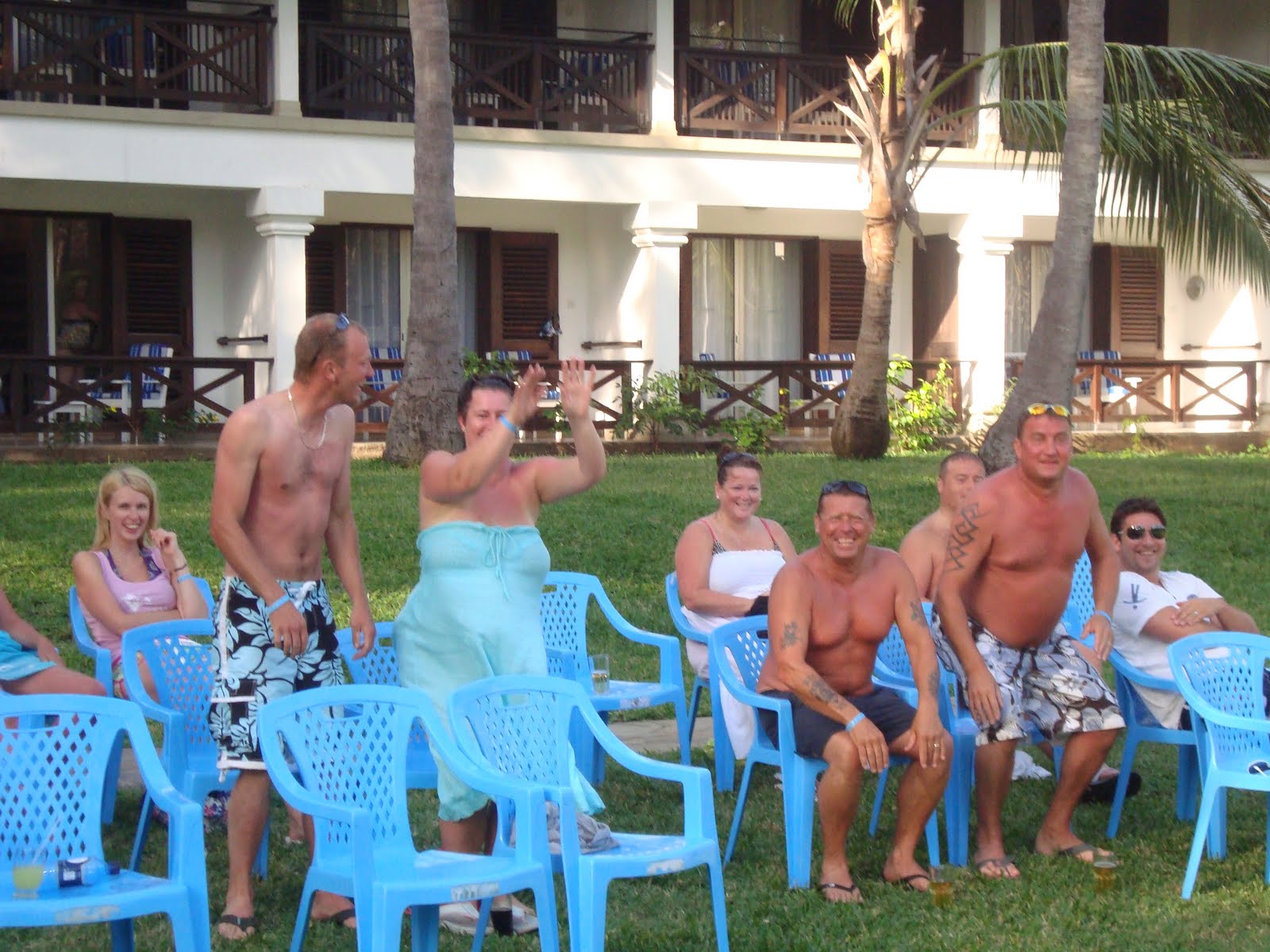
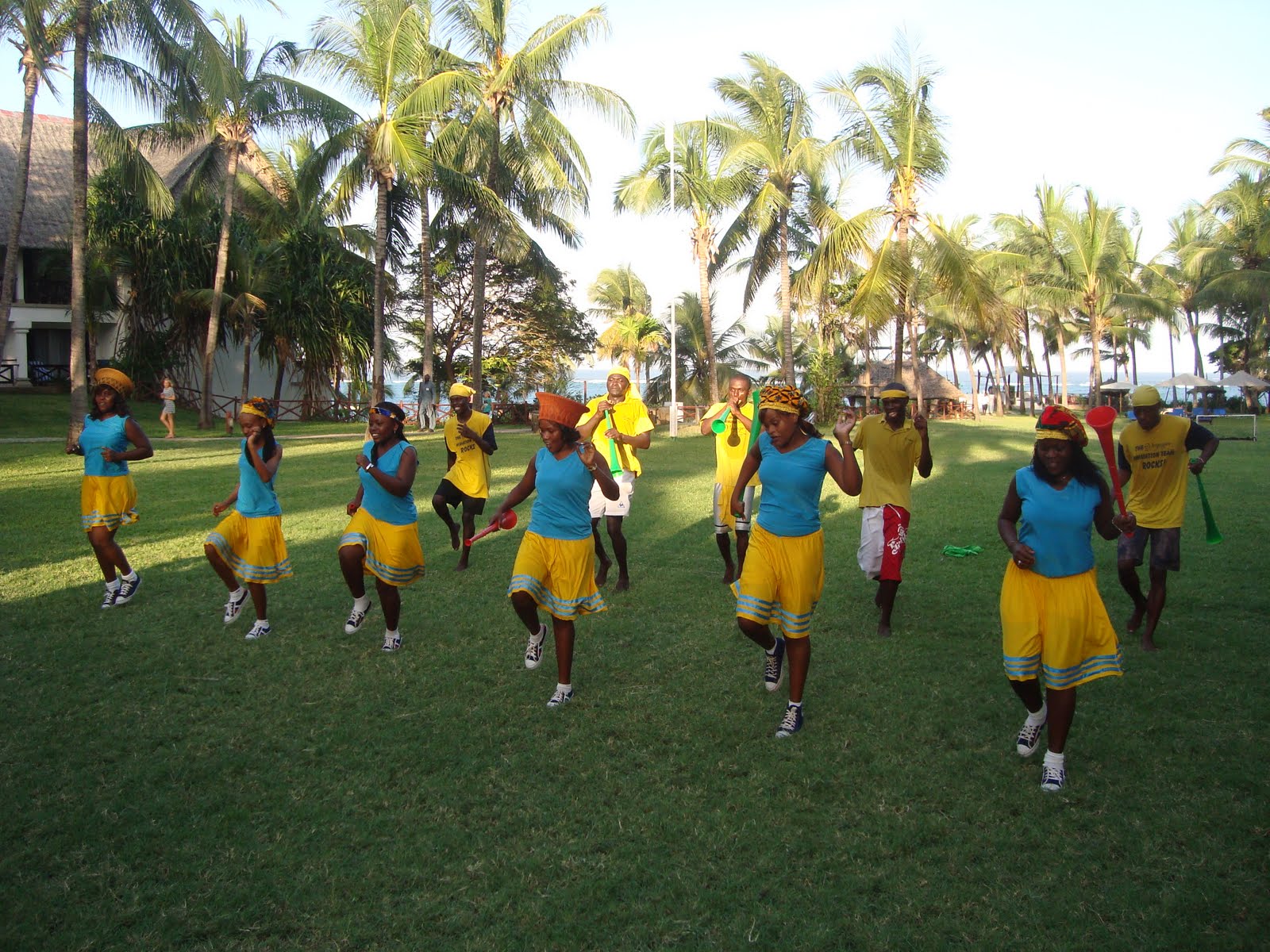
With the biggest global event just coming to a close in South Africa, Voyager Beach Resort held a six-a-side mini world cup recently which involved guests as well as the animation team. We had a total of three teams (aptly christened Ghana, Bafana Bafana and Kenya)  that took on each other on a league basis with the two top teams engaging in a final.


[The games were so captivating that the fans could not stick to their seats.]


[Part of the action during the finals]

[Bafana Bafana fans urge their team on with you guessed it - vuvuzelas!]

The results were as follows:
Game 1. Ghana 2 - Bafana 1
Game 2. Ghana 1 - Kenya 3
Game 3. Kenya 1 - Bafana 2

The pulsating final was between Ghana and Kenya. Ghana drew first blood after just two minutes, with Kenya replying after the restart to bring the game level. Ghana were again the first to score in the second half, with Kenya squeezing in an equaliser in the last minute of the game to send the game into extra time.

[The Mexican waves as the fans urged their teams on]

[Attendance: many thousands. Fans turned out in large numbers for this once-in-a-lifetime 'tournament'!]


[Tense moments at the Ghanaian technical area during the finals]

After some serious exchanges between the two teams, the game ended in a stalemate. The game was decided on penalties with Ghana carrying the day after burying two of their three penalties as opposed to Kenya who missed all of their three penalties.


[Yes we are the champions! Ghanaian fans celebrate their epic win.]


[And the moment all Africans have been waiting for: Ghana’s captain lifts the trophy high]


[While runners-up Kenya get the wooden spoon. Next time boys.]

The guest of honor was the Cruise Commander, Yusuf who congratulated the winning team while presenting them with the world cup trophy as well as animation t/shirts.


[A group picture of the participating teams after the tournament]


[No major world event is worth it's salt if the closing ceremony is not awesome! The diski dance, no less!]

Now who says life on board a cruiser is not all fun!


At last, an African team gets to lift the winning trophy in a major event - on home soil!

09 July, 2010

The Greatest Game Show on Earth - Issue 5

Migration review

It’s hot and sunny in the Mara following a bout of rain five days ago. The grass is green with new shoots along the edges of the reserve. This has triggered the grazers to move here from the middle of the reserve, which has not received any rain. The grass here is aged and dry and not palatable for the animals. Dry grass also needs a lot of water to digest. The herds therefore find it easier to move to greener pastures.

Large herds of wildebeest and zebras have crossed Talek River from Rekero camp west of the Mara Intrepids Camp trekking across Rhino Ridge towards Bila Shaka near the Musiara Gate.

It is raining in some areas in the reserve attracting the wildebeest, zebras and gazelles. Many herds are moving towards the Mara River and crossing into the Mara Triangle for the succulent grass. Large herds of zebra are crossing the river. They are well fed and so strong that the crocodiles are finding it difficult to hunt them. Delivering powerful kicks, they are able to make their escape and very few zebra carcasses have been spotted in the river this year.

The wildebeest however prefer to stay dry and grazing. The rutting season is coming to an end though some bulls are still gathering females in their territories. This leads to brief but intense fights between the dominant bulls. Last week we saw two battling males locked in combat with their horns unable to break loose. Finally, the day was saved when the horn of one wildebeest broke.


Big cats sightings

Lions

The Olkiombo Pride is back at its favorite migration corridor that links Topi Plains to Paradise Crossing. There is a lot of action here with the lions easily hunting the wildebeest and zebras.

The three males of the Olkiombo Pride are still together and have taken over the Maji ya Fisi Pride. This pride has cubs of different ages ranging between six and 14 months.

The Olkeju-Ronkai Pride is also together with its two males, five females and seven cubs occupying the plains between Lookout Hill and Intrepid Camp.

The Paradise Pride is in the Chemorta area that is between the Mara River and Paradise Plains where the big herds are moving. The pride is very busy with lots of prey to hunt. One female is mating with the male called Notch.


Leopards

Olive's sons, Pacha and Kayioni, are 13 months old. The Ridge male who is the father of the cubs, is with them. Pacha was seen devouring a wildebeest under the croton bush. He is shy of the Ridge male. Olive, perched on the leopard tree just watches the two eyeing each other.

On the other hand, a Lerai cub has being seen for more than two days without its mother at Ntiakitiak River.


Cheetahs

The three cheetah brothers are roaming between Ntiakitiak River and Talek River waiting for the wildebeest that will be crossing Talek River on their way to the Topi Plains. A female cheetah with two male cubs’ aged nine months is in the same area with the three brothers. Hopefully they will be no territorial disputes.


Paul Kirui, Chief Safari Guide, Heritage Hotels

You can read more on Mara Explorer and Mara Intrepids at http://www.heritage-eastafrica.com/tented-camps/

Book and pay for two nights at this property and get the third free! http://www.heritage-eastafrica.com/specials/3-for-2-safari-special/

05 July, 2010

Migration Update - Issue 4

As the annual migration of the wildebeest in the Mara continues, we are happy to bring you the latest reports from the field.

Monitoring the Migration

Since last week the Serengeti herds have been streaming in from the south with the leading herds pushing further north and others to the west and into the Mara Triangle. They crossed the river by Lookout Hill.

The recently burnt grasslands on the Mara Triangle are a great attraction for the wildebeest as they, like many other herbivores enjoy the fresh grass. However, the grass only shoots if the burning is soon followed by rain – and this year we have been very lucky with the rains.
 

Most of the Mara plains are still covered with tall red oat grass. For most herbivores this is too heavy on their digestive systems and so they prefer to rush through to reach the fresh succulent new shoots in the Mara Triangle.

Big herds of wildebeest and zebras are also between Sekenani Gate and Talek Gate, moving in single files towards the west side.  Posse Plain is full of wildebeest crossing the Talek River between Fig Tree Camp and Intrepids Camp and on to Topi Plains. Other herds are crossing below Rekero Camp moving towards Rhino Ridge, and on to Paradise Plains. While crossing the river many have fallen prey to the Nile crocodiles, who have being waiting for a year.

Large herds are crossings west of the Lookout Hill to Mara River, which has clear banks for them to look out for predators but it is not as popular as the traditional crossing on Paradise Plains. This is because the wildebeest can easily spot the crocodiles in the shallow pools.


Yesterday, huge herds crossed the Paradise Plains to the west of the Mara River. These were mainly herds coming from the south. They crossed the Talek River.


Scores of wildebeest have become the crocodiles quarry while others have met their death from the stampede while crossing. The past few days have been exciting for our guests who are spending whole days on game drives watching the great migration of the wildebeest.


BIG CATS

Lions
Lion sightings are still good. The lion prides are beginning to unite again after splitting into small groups because of scarce prey. Things have changed and the Mara is now a paradise for predators.

Leopards
Leopards have been seen around Olkiombo and along the Talek and Olare-Orok rivers.
South of Mara Intrepids Camp and almost 500 metres from the footbridge, Olive the BBC Big Cat Diary film star brought down a wildebeest with her year-old-male cubs.


Cheetahs
For the last seven months a female cheetah with an eight-month cub called Saba is at Topi Plains. She has been hunting young Tommies with the cub. The three cheetah brothers are still at Rhino Ridge hunting warthogs. They haven’t been very successful with the wildebeest. The young female cheetah between Topi Plains and the Mara Intrepids Camp climbs vehicles to scan the terrain. It’s a smart way to look over the tall grass.        


Subscribe to our RSS feed to get fresh updates from the wild (Samburu National Reserve, Masai Mara and Tsavo West National Park).

Paul Kirui, Chief Safari Guide, Heritage Hotels

You can read more on Mara Explorer and Mara Intrepids at http://www.heritage-eastafrica.com/tented-camps/

Book and pay for two nights at this property and get the third free! http://www.heritage-eastafrica.com/specials/3-for-2-safari-special/

01 July, 2010

Ed's visit to the Mara - 21st June

We had planned for the early morning game drive, and our room steward woke us up at 6.00 a.m. with a pot of hot Kenyan coffee to keep the chill away and some biscuits – yum! Dennis, our driver guide was already at the car park by half past six.


The plains are very beautiful at this time of the morning. We were driving towards the Simba-Talek area just as the sun was rising on the horizon.


Five minutes from the Mara Explorer camp, we come across a lone female ostrich. She looks like a typical tree on the plains, until you notice her movements. Behind her in the Fig Tree area, we can see balloons taking to the skies. This is the best way to see the plains – from above. Followed by champagne breakfast at well-chosen spots. There were many balloons on this day; the early birds were taking advantage of the low season rates to enjoy the Mara.

Ten minutes into our drive, and Dennis was getting concerned, “The animals are hiding.” Then he stopped the jeep abruptly – he had spotted lion spoors on the track. “There were lions here. These are fresh prints.” The grass is long, so they are not easy to spot. I stood on the back of the 4 x 4 to get some vantage as he moved on along slowly.

“Stop! Reverse!!” I called out excitedly. We’d just passed a lioness lying on the grass just a few metres from the road. Dennis obliged.


“Look, there’s another!” We were now craning out necks looking out for them. This is the Olkiombo pride, which is almost 30 strong! We were only seeing about four females.

Five minutes later, and there were four cars around the pride. One of the lionesses, annoyed by the all attention shows her displeasure by walking further into the long grass.


We drove on to see what more the plains have to offer. The plains are teaming with herds of wildebeest and zebra. The migration is we and truly on! We parked in their midst, and that constant call is all over the air. Maasai legend has it that the gnu were created by a committee – thus their funny looks. I concur.

On the banks of the Talek River, we came across a float of hippos enjoying the early morning sun, no doubt satisfied after feeding all night.


There were buffaloes around too. We had to watch out though because this lone male was looking at us aggressively.


This fella wasn't really happy with our attention. Why risk his wrath? Off we went!

Ndeithi Kariuki, Lo'mon LeHeritage Admin

18 June, 2010

The Great Wildebeest Migration Has Begun!

It's official - the annual migration of the wildebeest from the Serengeti in Tanzania to the Masai Mara in Kenya started six days ago. The comical animals nicknamed "the clown of the plains" and said to be put together by a committee, have moved across the south Mara plains. The herds split before entering the Central Plains with one herd heading west and the other to the north.


It’s a welcome surprise to see the migration start earlier than expected. Also this time, the main migration for the south arrived before the Loita herds as has been the tradition.


GREAT MIGRATION OF WILDEBEEST AND ZEBRAS

Having crossed the Sand River, the wildebeest with the zebras mowed their way from Keekorok to the Mara Bridge covering a distance of about 25 to 30 kilometers in a few days. Marching north towards Lookout Hill, they are busy and noisy as this is their rutting season. The males are calling, running up and down and fighting any competition to win over the females. It is indeed an interesting time to be in the Mara.

The females with their five-month-old calves are relishing the fresh red oat grass. However many natural water holes in the Mara are dry which will hasten the wildebeest to move further in search of waterholes with water in them. The first destination will be Ol-keju- Ronkai River and the Mara River near the Mara Intrepids Camp. This might mean that the Mara River crossing may happen sooner than expected.

Due to the recent heavy rains, there’s a lot of grass for the herbivores. The effect? It’s triggered the mating season for elephants and topis. We are seeing many herds of elephants around Olkiombo.

The topis are in their local breeding grounds on Topi Plains and Paradise Plains. There’s good game viewing east of Mara Intrepids towards the Masai villages where the grass is short due to over grazing by the Masai cattle.

Down south towards Lookout Hill, there are a lot of zebras and topis.

  
Predator Sightings

Lions    

Lion sightings are still good but the prides are beginning to split into small group. This is primarily due to the availability of prey because the grass-eating prey or the herbivores are moving to the short grass plains.

The Olkiombo Pride has split into four groups – there’s a lioness with her cubs who is avoiding all male lions because the males may take the food for the family.

Since April, the four sub adult males are down to three. This is because one of the males has left the pride after attacking a herd of Masai cattle. This male is still within its home range.

The three adult males are moving towards Maji-ya-Fisi pride (Hyena Dam) hoping to take over that pride if they do not encounter any resistance from the males.
The Paradise Pride is strong; it has six adult males who hunt hippos. This provides the pride with enough food.

The Ol-Kejuronkai Pride still has two males. Altogether, it has thirteen members in the family pride. They are well fed and looking healthy. This is one area that the herbivores avoid because the grass is one and half meter high making it difficult for them to see the predator approaching. This pride preys on the old, solitary buffaloes.      

Leopards

Leopards have been seen around Olkiombo, along the Talek and Olare-Orok Rivers.
Olive, one of the BBC Big Cat Diary film stars, has been prowling between Mara Explorer and Mara Intrepids. She is with her two twelve-month old male cubs who are left alone most the time for one or two weeks during which time they try to hunt hares and Kirk’s dik-dik. Olive has been hunting warthog piglets, impalas and Bohor reedbucks. The Ridge male who is the father of Olive’s male cubs is between Olare Orok and Rhino Ridge.

Big Boy who is the father of Olive’s three sub adult cubs - Aya, Binti and Kali - is between Talek and Mara River. He has been sharing territory with his son, Kali.

North of Mara Intrepids along Intiakitiak River, a female that has been there for some time has finally brought her two cubs out of the hidden lair. They are five months old and we are yet to name them.

Cheetahs

For the last seven months a female cheetah with a cub named Saba has been seen at Topi Plains where there is a lot of plains game. The cub is eight months old and is being trained by her mother to hunt young Tommies.

The three cheetah brothers are residing on top of Rhino Ridge hunting warthogs. However the topis are proving too hard for them.

A young female cheetah who is new to this part of the Mara is seen between the Topi Plains and Mara Intrepids camp. She loves climbing vehicles – one reason could be that it’s easier for her to spot her prey. 


Book and pay for two nights at this property and get the third free! http://www.heritage-eastafrica.com/specials/3-for-2-safari-special/


John Parmasau, Safari Guide, Mara Intrepids    
(Lo'mon is Samburu for news; Le Heritage means from Heritage)